2026 How to Understand Silicon Carbide Meaning and Uses?
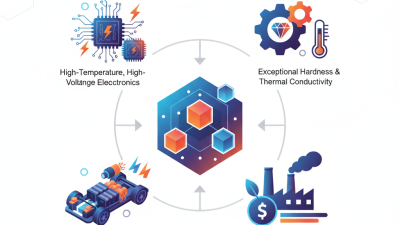
Silicon Carbide, often abbreviated as SiC, is a compound of silicon and carbon. It's gaining popularity due to its unique properties. Understanding Silicon Carbide meaning is vital, especially in industrial applications. SiC is known for its hardness, thermal conductivity, and resistance to chemical corrosion. These attributes make it ideal for high-performance electronic devices.
Applications of Silicon Carbide span various industries. From automotive to aerospace, SiC components enhance efficiency. They are used in power electronics, improving energy conversion. Yet, with these benefits come challenges. The manufacturing process is complex and costly. This creates barriers for some businesses.
To navigate these complexities, expertise is key. Understanding the Silicon Carbide meaning helps engineers and researchers innovate. As demand grows, continuous learning about SiC's capabilities is essential. This knowledge enables better product development. Overall, Silicon Carbide is a material with great potential, but it needs careful consideration in its applications.

Understanding the Chemical Structure of Silicon Carbide (SiC)
Silicon carbide (SiC) is a compound made of silicon and carbon atoms. Its unique structure gives it exceptional strength and thermal conductivity. SiC crystallizes in different forms, with 3C-SiC being the most common. This structure allows SiC to endure high temperatures and resist oxidation. Industry reports predict that SiC's demand will skyrocket in the coming years, especially in sectors like electric vehicles.
The chemical bonds in SiC are particularly strong. Electrons are tightly held, contributing to its outstanding hardness and durability. According to recent data, SiC retains its properties even at elevated temperatures of over 1,600°C. This makes it an ideal candidate for applications in power electronics and semiconductor devices, where reliability is critical. Some research suggests that SiC can improve efficiency in energy conversion systems, highlighting its potential for sustainable technology.
However, producing high-quality SiC remains challenging. Current fabrication methods can be costly and complex. Researchers are exploring alternative growth techniques to enhance production efficiency. The industry faces a learning curve, but the payoff could redefine materials science. As the technology matures, we may achieve lower costs and wider applications for silicon carbide.
Key Properties of Silicon Carbide: Hardness, Thermal Conductivity, and More
Silicon carbide (SiC) stands out for its remarkable properties. One notable characteristic is its hardness. SiC rates between 9 and 9.5 on the Mohs scale, making it one of the hardest materials available. This property empowers silicon carbide to efficiently cut and grind tougher materials, enhancing operational efficiency in various industries.
Thermal conductivity is another crucial property of silicon carbide. It boasts a thermal conductivity of around 120 to 200 W/m·K, depending on the material form. This distinguishes SiC from other ceramics. The superior thermal conductivity allows for better heat dissipation in electronic devices, improving their performance. According to recent reports, the demand for SiC in semiconductor applications is projected to grow significantly, potentially achieving a market value of over $4 billion by 2026.
Despite its advantages, silicon carbide is not without challenges. The production process is energy-intensive and can be costly. Achieving defect-free samples remains a focus for researchers. Continuous advancements in manufacturing techniques aim to reduce these barriers. Real-world applications will depend on overcoming these technical hurdles while maximizing the advantages silicon carbide offers.
Applications of Silicon Carbide in Power Electronics and Renewable Energy
Silicon carbide (SiC) is revolutionizing power electronics. Its unique properties enhance efficiency and reduce energy losses. Reports indicate that the global SiC market is expected to reach $3 billion by 2027, driven mainly by the demand in renewable energy sectors.
In power electronics, SiC devices operate at higher voltages and temperatures. They can handle up to 1,200 volts, exceeding traditional silicon components. This capability allows for smaller, lighter systems with superior performance. For instance, electric vehicle (EV) manufacturers are increasingly using SiC in their onboard chargers and drive systems. This results in faster charging times and longer range.
Renewable energy applications are also thriving. SiC plays a vital role in solar inverters and wind turbine converters. These systems benefit from SiC's ability to operate more efficiently under high thermal conditions. Studies show that SiC devices can improve power conversion efficiency by over 20%. However, challenges remain. The high-cost barrier and complexity in manufacturing SiC devices can limit widespread adoption. Companies must continuously innovate to make these technologies more accessible.
Market Trends and Future Growth Projections for Silicon Carbide Industries
Silicon carbide (SiC) is gaining traction in various industries. It is due to its unique properties, such as high thermal conductivity and exceptional hardness. The global silicon carbide market is projected to grow at a compound annual growth rate (CAGR) of around 17% from 2023 to 2030, according to Allied Market Research. This growth reflects a surge in demand, particularly in electric vehicles (EVs) and renewable energy applications.
The demand for SiC is driven by the rising use of power electronics. The electric vehicle market alone is expected to see a significant boost, with SiC devices improving energy efficiency. Reports suggest that SiC adoption in EVs could increase by 27% by 2026. This surge is partly due to the need for faster charging and longer battery life. The semiconductor industry's transition to SiC-based technologies shows its reliability and efficiency. However, challenges remain. Producing high-quality SiC crystals is costly, and market dynamics can be unpredictable.
As manufacturers continue to explore the potential of silicon carbide, innovation is key. New fabrication techniques are emerging, but scalability is an issue. The industry must also consider the environmental impact of SiC production. Balancing growth and sustainability will be crucial in the coming years. The future of SiC hinges on addressing these challenges while meeting the growing market demands.
Challenges and Innovations in Silicon Carbide Manufacturing Processes
Silicon carbide (SiC) has emerged as a key player in advanced manufacturing. The material's unique properties lead to significant innovations. However, challenges persist in the production processes. Reports indicate that the global SiC market is set to reach USD 4.85 billion by 2027, showcasing a CAGR of 23.6% from 2020. While many manufacturers aim to increase production efficiency, they often face issues related to material purity and defect control.
Current manufacturing methods can introduce impurities, impacting performance. For example, the use of traditional sintering processes often leads to variations in material quality. Innovative techniques such as chemical vapor deposition (CVD) show promise, but scalability remains a challenge. Experts highlight the need for balanced investments in research and development to overcome these hurdles.
Tip: Regular audits of production processes can help identify areas for improvement. Collaboration among industry players may expedite the sharing of best practices.
The complexity of SiC manufacturing requires continuous innovation and adaptation. As the demand for energy-efficient technologies grows, so does the need for refining processes. Manufacturers are encouraged to explore new chemical compositions and production arrangements. Historical data shows that, while some advancements have been made, the industry's evolution is ongoing.