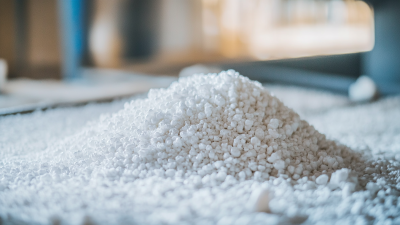
Why is Alumina Oxide Important for Industrial Applications and Manufacturing
Alumina oxide, also known as aluminum oxide, plays a crucial role in various industrial applications and manufacturing processes due to its unique properties. According to Dr. Emily Carson, a leading expert in materials science, "Alumina oxide is not just a raw material; it’s a vital component that enhances the performance and durability of countless products." This statement underscores the significance of alumina oxide as a versatile material in industries ranging from electronics to aerospace.
With its exceptional hardness, thermal stability, and resistance to wear and corrosion, alumina oxide is essential for producing advanced ceramics, refractories, and cutting tools. It serves as a vital substrate for electronic circuits and is key in catalysis processes, significantly impacting production efficiency and product quality. Furthermore, alumina oxide's ability to improve the mechanical attributes of composite materials only adds to its importance in modern manufacturing.
As industries continue to innovate and seek materials that meet ever-increasing performance standards, the demand for alumina oxide is expected to rise. Understanding its applications and benefits will be crucial for companies aiming to remain competitive in the evolving landscape of industrial materials.

Importance of Alumina Oxide in Industrial Applications
Alumina oxide, also known as aluminum oxide, plays a crucial role in various industrial applications due to its unique properties. This compound is highly valued for its exceptional hardness, chemical stability, and resistance to wear and corrosion. As a result, it is commonly used in the manufacturing of ceramics and abrasives, where its durability ensures longevity and effectiveness. The ability to withstand high temperatures makes alumina oxide an essential material in high-performance applications, such as in the automotive and aerospace industries for components like engine parts and heat shields.
In addition to its mechanical properties, alumina oxide serves as an excellent electrical insulator, making it vital in the electronics industry. It is utilized in capacitors, insulators, and substrates for circuit boards. Its non-reactive nature also contributes to its use in various chemical processes, where it acts as a catalyst support due to its large surface area and ability to enhance reaction rates. Overall, the versatility of alumina oxide in performing under diverse conditions highlights its importance across multiple sectors, from manufacturing to electronics, cementing its position as a key material in industrial applications.
Why is Alumina Oxide Important for Industrial Applications and Manufacturing
| Application Area |
Importance of Alumina Oxide |
Properties Contributing to Effectiveness |
Common Uses |
| Abrasives |
High hardness and durability make it ideal for grinding |
Mohs hardness of 9 |
Sandpaper, grinding wheels |
| Ceramics |
Enhances strength and reduces shrinkage during firing |
Low thermal expansion, high melting point |
Dental ceramics, tiles |
| Electronics |
Excellent electrical insulation properties |
Wide bandgap semiconductor properties |
Insulators, substrates |
| Catalysts |
Provides a stable surface for chemical reactions |
High surface area and porosity |
Catalytic converters, chemical production |
| Thin Films |
Used as a protective and dielectric layer |
Chemical resistance, stability |
Microelectronics, optics |
Chemical Properties of Alumina Oxide and Their Implications
Alumina oxide, or aluminum oxide (Al2O3), is a compound with remarkable chemical properties that make it essential for various industrial applications and manufacturing processes. One of its key characteristics is its high melting point, around 2,072 degrees Celsius, which allows it to withstand extreme temperatures. This property is especially valuable in industries such as metallurgy and ceramics, where materials are often exposed to intense heat. Additionally, alumina oxide is chemically stable and resistant to corrosion, making it an ideal choice for use in environments that involve harsh chemicals and corrosive substances. Its durability ensures that products maintain their integrity over time, thus enhancing the lifecycle and sustainability of manufactured goods.
Moreover, the versatility of alumina oxide extends to its electrical and thermal insulation properties. It serves as an excellent insulator, making it particularly useful in the production of electronic components and high-voltage insulators. Its ability to act as a barrier to electrical conductivity is critical in preventing energy loss and ensuring the safety of various devices. Furthermore, alumina oxide can be engineered to have different morphologies, such as porous or dense forms, which provides flexibility in application. This adaptability allows manufacturers to tailor materials for specific functionalities, thereby meeting the distinct requirements of diverse industries ranging from electronics to aerospace. Overall, the unique chemical properties of alumina oxide play a pivotal role in advancing technology and improving manufacturing processes.
Applications of Alumina Oxide in Manufacturing Processes
Alumina oxide, or aluminum oxide (Al2O3), plays a crucial role in various manufacturing processes due to its unique properties, including high hardness, excellent thermal stability, and resistance to wear and corrosion. A report from the Global Alumina Market indicates that the demand for alumina oxide is projected to grow at a CAGR of 4.6% from 2021 to 2028, highlighting its increasing importance across different industrial applications.
In manufacturing, alumina oxide is widely utilized in the production of ceramics, abrasives, and refractories. For example, in the ceramics industry, alumina is a fundamental component used to enhance the strength and durability of products, making it ideal for tiles, sanitary ware, and electrical insulators. Additionally, its application in abrasives is notable; the material is used in grinding wheels and sanding materials, enabling finer finishes and greater efficiency in machining processes. A report by MarketsandMarkets projects that the global ceramics market, driven by the application of alumina oxide, will reach USD 244 billion by 2026.
Furthermore, alumina oxide is essential in the field of electronics, particularly in the fabrication of substrates for semiconductors. Its excellent insulating properties and thermal conductivity make it an ideal choice for maintaining efficient heat management in electronic devices. Recent data from an industry analysis suggests that the use of ceramic materials, including alumina oxide, in electronics is expected to grow significantly, with a focus on high-performance semiconductors and advanced packaging applications, projecting a market increase of over 35% in the next five years.
Cost-Effectiveness and Sustainability of Using Alumina Oxide
Alumina oxide, or aluminum oxide (Al2O3), is gaining traction in industrial applications due to its remarkable cost-effectiveness and sustainable properties. According to a market research report by Grand View Research, the global alumina market is expected to exhibit a compound annual growth rate (CAGR) of 5.2% from 2021 to 2028. This growth is driven by its versatility, being utilized in ceramics, abrasives, and refractories, among other sectors. The cost advantages stem from the abundance of aluminum-rich minerals and the efficient extraction processes that lower production costs while ensuring high purity levels essential for various applications.
Sustainability is another critical factor propelling the favor of alumina oxide in manufacturing. As industries increasingly prioritize eco-friendly materials, alumina oxide presents a viable alternative due to its recyclability and low environmental impact. According to a report by the International Journal of Sustainable Engineering, recycled alumina reduces energy consumption by up to 95% compared to primary production. This not only highlights its sustainability credentials but also reinforces its appeal to manufacturers aiming to meet stringent environmental regulations. By integrating alumina oxide into their processes, companies can enhance their sustainability profiles while capitalizing on cost-efficiency, thereby driving both economic and environmental benefits in the industrial landscape.
Future Trends and Innovations Involving Alumina Oxide
The future trends and innovations involving alumina oxide are set to revolutionize various industrial applications, particularly in electronics and advanced materials. As the demand for lightweight, durable, and heat-resistant materials grows, researchers are exploring innovative ways to enhance the properties of alumina oxide. This includes the development of nanostructured alumina, which offers increased surface area and improved mechanical strength, making it ideal for use in high-performance coatings and composite materials.
Additionally, alumina oxide is playing a crucial role in the production of next-generation batteries and fuel cells. With the push towards sustainable energy solutions, the incorporation of alumina oxide in energy storage systems can lead to more efficient charge cycles and improved longevity. Innovations in its synthesis methods are also paving the way for more cost-effective and scalable production processes, potentially lowering the barriers for widespread adoption in various sectors. As these trends progress, the versatility of alumina oxide will continue to expand, driving advancements in manufacturing and technology.