Silicon Carbide Meaning Types Uses and 2026 Buying Guide
Silicon Carbide Meaning extends beyond a simple chemical definition. Silicon carbide, or SiC, is a hard compound made from silicon and carbon. It withstands high temperatures, electrical stress, and abrasive conditions. These properties make it important in power electronics, electric vehicles, solar inverters, industrial drives, and technical ceramics.
The material is not one uniform product. Common types include black silicon carbide, green silicon carbide, reaction-bonded SiC, and sintered SiC. Each type offers different purity, hardness, thermal performance, and cost. A black SiC abrasive may serve a cutting wheel, while a high-purity SiC wafer supports a 1,200-volt power device. The choice matters.
The International Energy Agency reported that global electric car sales exceeded 17 million in 2024. This growth strengthens demand for efficient power semiconductors. Yole Group’s Power SiC reports also identify automotive traction inverters as a major application area. These devices can reduce switching losses and support compact vehicle power systems. The U.S. Department of Energy has similarly highlighted wide-bandgap semiconductors for improving power conversion efficiency.
However, buying decisions require caution. Market forecasts differ because analysts measure wafers, devices, modules, or total system value. Supply constraints, wafer defects, coating quality, and packaging reliability can change the real cost. A lower quotation may hide higher processing losses. This 2026 guide examines silicon carbide types, practical uses, performance factors, and purchasing criteria. It also questions where SiC genuinely adds value, rather than treating it as a universal replacement for silicon.
What Is Silicon Carbide? Definition, Properties, and Significance
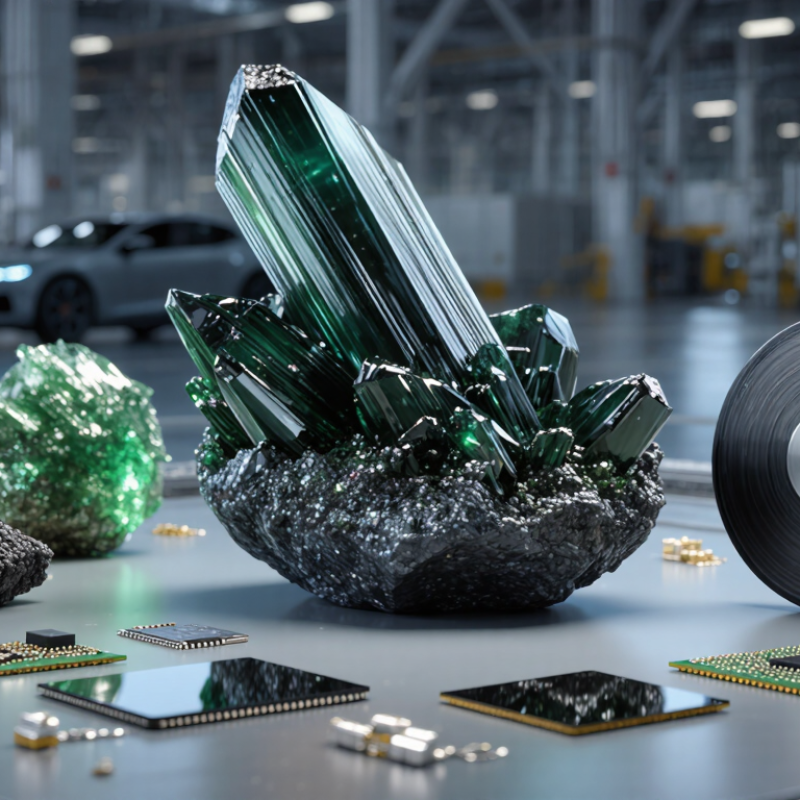
Silicon carbide, or SiC, is a compound made from silicon and carbon. It is not ordinary carbon or conventional ceramic. Its crystal structure gives it a wide bandgap of about 3.26 electron volts. That matters. Devices can operate at higher temperatures and voltages than many silicon-based alternatives. U.S. Department of Energy technical assessments list thermal conductivity near 3–5 W/cm·K and a critical electric field roughly ten times higher than silicon.
Its hardness also explains its long use in abrasives, cutting tools, furnace components, and protective ceramics. However, hardness brings manufacturing difficulty. SiC wafers are brittle, and defects can reduce device performance. The material is powerful, but not automatically economical. Processing yield remains important.
Demand is closely linked to electrification. The International Energy Agency’s Global EV Outlook 2024 reported more than 14 million electric cars sold worldwide in 2023. Its 2024 outlook expected sales to exceed 17 million. SiC power modules can reduce switching losses in inverters and charging systems, especially at high voltage. Industry analyses also forecast strong growth in SiC power-device revenue through 2030. Those forecasts deserve caution. Market estimates differ because they use different definitions and shipment boundaries.
Common forms include abrasive grains, sintered ceramics, and semiconductor-grade wafers. Color, purity, grain size, and defect density affect the application. A purchasing decision should examine thermal cycling data, dimensional tolerance, and tested electrical performance, not only quoted purity. Small omissions can become expensive failures.
Main Silicon Carbide Types and Their Structural Differences
Silicon carbide is defined by more than hardness. Its crystal structure changes thermal behavior, electrical response, and processing performance.
Alpha-SiC is the dominant family. It forms hexagonal or rhombohedral polytypes, including 4H and 6H. These labels describe different layer sequences. The atoms are chemically similar, but their stacking is not. That small difference matters in high-temperature components and electronic applications. Beta-SiC, commonly called 3C-SiC, has a cubic structure. It can offer strong surface uniformity and useful transport properties, yet it is less stable at extreme temperatures. Porous SiC contains engineered voids rather than a fully dense body. Its permeability improves, but strength usually falls. Trade-offs are real.
For purchasing, ask for the polytype, purity, grain size, density, and processing route. Do not rely on color alone. Black and green grades may indicate different impurity levels, but color is not a structural certificate. In practical material checks, I would compare the datasheet with X-ray diffraction, microscopy, and density results. A supplier’s “high purity” claim needs a test method and detection limit. This is often overlooked. 3C-SiC may sound like the best choice for every precise component, but application temperature, geometry, and joining method can change that decision. Even experienced buyers can overvalue hardness and ignore thermal shock. That mistake is costly.
How Silicon Carbide Is Made and Processed
Silicon carbide begins with silica, often quartz sand, and a carbon source such as petroleum coke. Manufacturers heat this mixture in an electric resistance furnace at roughly 2,000–2,500°C. The reaction forms large crystalline blocks, which are cooled and broken into grains or powder. Furnace conditions affect color, purity, hardness, and electrical behavior.
Processing depends on the intended use. Abrasive-grade material is crushed, milled, screened, and separated by particle size. Further purification may include magnetic separation, washing, or chemical treatment. Ceramic-grade powder requires tighter control. It may be blended with binders, pressed or molded, and sintered at high temperatures. Some components use reaction bonding, while advanced parts may use chemical vapor deposition. These routes need careful inspection because tiny impurities can weaken a finished component.
Tips: Ask for purity data, grain-size distribution, bulk density, and test methods. Check whether the powder is loose, bonded, or surface-treated. Match the grade to the application, not just the color. Green silicon carbide often suits precision abrasive work, while black grades support tougher general applications. A common mistake is judging quality by appearance alone. Production records and independent test results are more useful. Even experienced buyers can overlook moisture, packaging damage, or inconsistent particle sizing. That oversight can change cutting performance or sintering results.
Silicon Carbide Uses Across Industry, Technology, and Energy
Silicon carbide is a hard ceramic compound made from silicon and carbon. Its strength, heat resistance, and low weight support demanding industrial applications. In workshops, it appears in cutting wheels, grinding tools, kiln furniture, and wear-resistant linings. Green and black grades serve different cutting and finishing needs. Engineers must match grain size, bonding method, and surface pressure carefully.
Small details matter. In advanced technology, 4H-SiC and 6H-SiC wafers support high-voltage semiconductor devices. These devices can switch power efficiently while operating at higher temperatures than many conventional materials. They are used in electric vehicles, charging systems, telecommunications equipment, and solar inverters. Better switching can reduce cooling requirements, but device performance still depends on packaging, electrical design, and manufacturing quality.
Energy projects use silicon carbide in turbine seals, heat exchangers, and power-conversion systems. Its resistance to thermal shock helps equipment face repeated heating and cooling. During purchasing, review purity, density, crystal structure, dimensions, tolerances, and test documentation. Ask whether the material is sintered, reaction-bonded, or supplied as loose abrasive. A cheaper component may create more downtime through cracking or uneven wear. The material is not a universal fix. Practical trials remain important, because laboratory data may not reflect dust, vibration, moisture, or careless installation. Even experienced teams can overlook these conditions.
2026 Silicon Carbide Buying Guide: Grades, Quality, and Cost Factors
Silicon carbide buying in 2026 requires more than choosing a purity number. The IEA reported over 17 million electric cars sold in 2024, with sales expected to exceed 20 million in 2025. This growth supports demand for efficient silicon carbide power components. However, demand does not make every grade suitable.
Specify the application before comparing quotations. Abrasive-grade SiC may accept wider impurity limits and irregular particles. Semiconductor-grade material needs controlled polytype, low micropipe density, stable resistivity, and strong lot traceability. 4H-SiC is widely selected for power devices, while 6H-SiC may suit different optical or research requirements.
Ask for particle-size distribution, bulk density, thermal conductivity, and inspection methods. Short certificates are not enough.
Cost depends on purity, crystal quality, processing yield, machining, testing, packaging, and shipping distance. Yole Intelligence’s recent power-SiC market analysis identifies automotive traction as a major demand center, but supply expansion can also pressure prices. A cheaper quotation may hide higher rejection risk. I have seen buyers focus too heavily on purity while overlooking surface defects and inconsistent batches. That is an expensive mistake. Request samples, compare identical specifications, and review at least three recent lot reports before committing. A 2026 purchase should measure usable yield, not only price per kilogram.