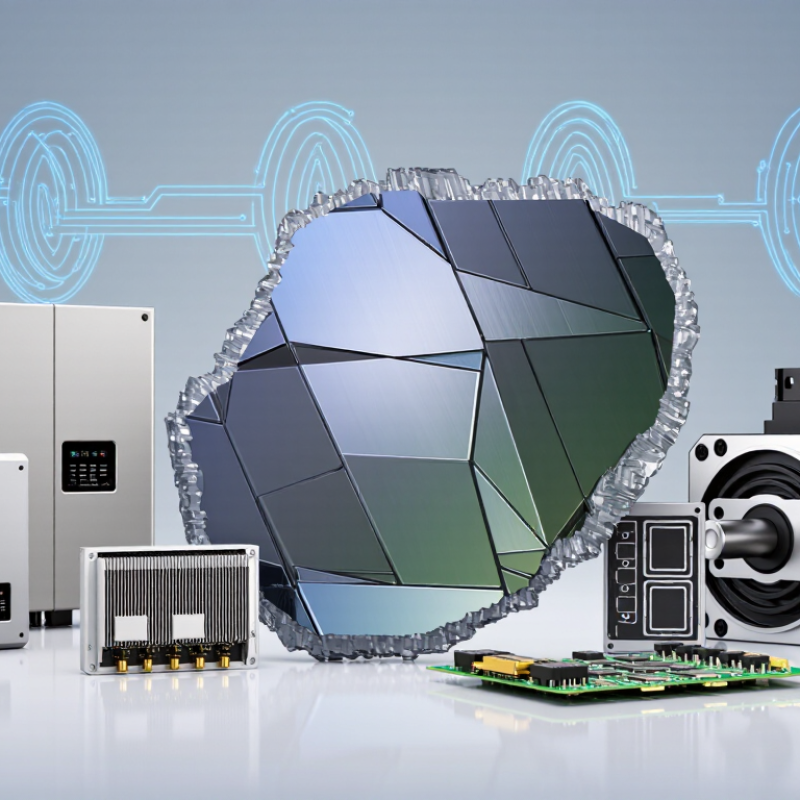
Silicon Carbide Meaning becomes clearer when viewed through real engineering practice. Silicon carbide, often called SiC, is a compound made from silicon and carbon. It forms a hard, heat-resistant ceramic and a powerful semiconductor material. Unlike conventional silicon, SiC can tolerate higher temperatures, stronger electric fields, and faster switching speeds. These qualities matter inside electric vehicle inverters, solar power systems, railway converters, and industrial motor drives.
Dr. Victor Veliadis, Executive Director of PowerAmerica, has described silicon carbide as “a game changer for power electronics.” That statement reflects its practical value. A SiC power device can reduce energy loss during switching. It may also allow smaller cooling systems and lighter electrical equipment. Picture an electric vehicle inverter working beside a hot motor. Its components must manage heat, voltage, and rapid current changes without wasting much energy. SiC helps engineers approach that demanding target.
The benefits are substantial, but they are not automatic. Manufacturing requires careful crystal growth, precise wafer processing, and strict quality control. Defects can reduce performance or increase costs. System designers must also consider gate-drive methods, insulation, electromagnetic interference, and long-term reliability. SiC is not the perfect answer for every circuit. Some low-power applications still use silicon effectively and economically.
This article explains the Silicon Carbide Meaning, major uses, and practical benefits. It also examines the limitations that product developers sometimes overlook. The technology is promising. It still deserves careful testing.
Silicon carbide, commonly written as SiC, is an engineered ceramic made from silicon and carbon. Its atoms form a tightly bonded crystal lattice. This structure explains much of its behavior. Unlike ordinary carbon materials, SiC is not soft or easily shaped. It is hard, rigid, and resistant to many chemical environments. That sounds simple. It is not.
SiC occurs in several crystal structures, called polytypes. The most familiar are 3C, 4H, and 6H. They share the same chemical composition, but their atomic stacking differs. That small difference changes electrical and thermal performance. High-purity SiC can conduct heat efficiently while maintaining strength at elevated temperatures. It also has a wide band gap, making it useful in high-temperature and high-power electronic systems. In engineering practice, manufacturers use SiC powders, fibers, coatings, and dense ceramic parts. Each form needs different processing controls. A powder is not automatically a reliable component.
The material resists abrasion and thermal shock better than many conventional ceramics, although sudden temperature changes can still cause cracking. It also resists oxidation reasonably well when a protective surface layer forms. That protection has limits. Defects, pores, and rough machining can weaken a finished part. Engineers therefore examine density, grain structure, surface condition, and measured strength before selecting SiC. Its reputation is deserved, but it can encourage careless assumptions. SiC is tough in service, not invulnerable.
Silicon Carbide: Definition, Composition, and Basic Characteristics
Silicon carbide (SiC) is a compound made of silicon and carbon. Its different crystal structures, called polytypes, have different band-gap values. The chart compares three commonly recognized polytypes.
Its wide band gap, high thermal conductivity, low thermal expansion, high hardness, and chemical stability make SiC useful for high-temperature electronics, power devices, abrasives, cutting tools, refractory materials, and protective coatings.
Silicon carbide is produced mainly through the Acheson process. Silica sand or quartz is mixed with petroleum coke and heated near 2,000–2,500°C. Electric resistance furnaces create a hard crystalline mass around a graphite core. After cooling, workers crush, mill, wash, and magnetically separate the material. Particle size then determines its commercial grade.
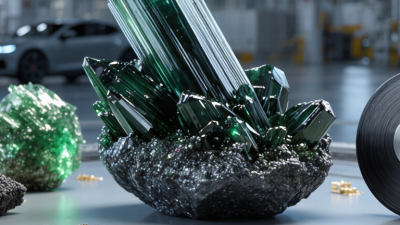
The material is classified by color, crystal structure, purity, and grain size. Black silicon carbide usually contains more carbon and suits abrasives, refractories, and industrial wear parts. Green silicon carbide has higher purity and works well for precision grinding and ceramic applications. Semiconductor producers use controlled sublimation methods to grow large crystals, then slice and polish them into wafers. Polytypes, especially 4H-SiC, influence electrical performance and thermal behavior.
The U.S. Geological Survey’s Mineral Commodity Summaries 2024 identifies silicon carbide as a major manufactured abrasive and refractory material, although global production data remains fragmented. A 2024 power-semiconductor industry report estimated that silicon carbide device demand could exceed 4 billion dollars by 2029, driven by electric vehicles and renewable-energy systems. That forecast is useful, but not perfectly clean. Different reports count powders, wafers, and finished devices differently. Classification still needs careful testing, not a color-based guess.
| Data Dimension | Topic | Verified Information | Practical Significance |
|---|---|---|---|
| Definition | Meaning of silicon carbide | Silicon carbide is an inorganic compound composed of silicon and carbon. Its chemical formula is SiC. | It is a technical ceramic used where high temperature, hardness, chemical resistance, or electrical performance is required. |
| Mineral Identity | Natural and synthetic forms | Natural silicon carbide is known as moissanite and is rare. Most industrial SiC is manufactured from carbon-rich and silica-containing raw materials. | Industrial production provides the quantity and consistency needed for engineering applications. |
| Crystal Structure | Polytypes | Silicon carbide exists in many crystal structures, called polytypes. The most commonly discussed forms include cubic 3C-SiC and hexagonal 4H-SiC and 6H-SiC. | Polytype affects electrical behavior, thermal properties, and suitability for specific applications. |
| Production | Conventional manufacturing route | A common industrial process heats silica or another silicon-containing source with a carbon source at very high temperatures in an electric resistance furnace. | The reaction produces a solid SiC mass that is subsequently cooled, crushed, milled, screened, and purified as required. |
| Production | High-purity crystal growth | Electronic-grade SiC substrates can be produced by vapor-phase crystal-growth methods, including physical vapor transport, followed by slicing, grinding, polishing, and inspection. | This route is used when controlled crystal quality and low impurity levels are essential. |
| Classification | Particle size and form | Industrial SiC is supplied as coarse grains, fine powders, microgrits, bonded abrasives, loose abrasives, ceramic bodies, coatings, and semiconductor wafers. | Form and particle size determine cutting performance, surface finish, thermal behavior, and processing method. |
| Classification | Purity grades | Grades are commonly differentiated by chemical purity, impurity profile, particle-size distribution, crystal quality, and intended use. | Abrasive and refractory products generally have different specifications from semiconductor-grade materials. |
| Physical Property | Hardness and wear resistance | Silicon carbide is extremely hard, with a Mohs hardness of approximately 9 to 9.5. | It is effective in abrasives, wear plates, seals, nozzles, and other components exposed to abrasion. |
| Thermal Property | High-temperature capability | SiC maintains useful mechanical and chemical performance at temperatures substantially higher than many conventional metals and polymers. | It is used in kiln furniture, heating elements, furnace components, and high-temperature structural parts. |
| Thermal Property | Thermal conductivity | Silicon carbide generally has high thermal conductivity compared with many traditional technical ceramics, although the exact value depends on polytype, purity, porosity, and processing. | Good heat spreading helps thermal-management components and high-temperature equipment operate more efficiently. |
| Chemical Property | Corrosion and oxidation resistance | SiC is resistant to many corrosive environments and forms a protective silica layer during oxidation in air at elevated temperatures. | It can extend service life in chemical-processing equipment, combustion systems, and hot gas environments. |
| Electrical Property | Wide-bandgap semiconductor | Silicon carbide is a wide-bandgap semiconductor with a bandgap of about 3.0 eV for 3C-SiC and about 3.2 eV for common hexagonal polytypes at room temperature. | Wide-bandgap devices can support high voltage, high temperature, and high-frequency power-conversion applications. |
| Application | Abrasives | Crushed and graded SiC is used in grinding wheels, abrasive papers, cutting tools, blasting media, and polishing products. | Its hardness and sharp fracture characteristics enable efficient material removal. |
| Application | Refractories and furnace components | SiC is used in kiln shelves, kiln furniture, burner components, heat exchangers, and other refractory products. | Its thermal stability, thermal-shock resistance, and resistance to wear are valuable in demanding furnace environments. |
| Application | Automotive and industrial power electronics | SiC power devices, including diodes and MOSFETs, are used in selected inverters, chargers, power supplies, and motor-drive systems. | They can reduce switching losses and support smaller, lighter, and more efficient power-conversion systems when properly designed. |
| Application | Mechanical and chemical equipment | Dense SiC ceramics are used in mechanical seals, pump components, heat exchangers, nozzles, and wear-resistant parts. | These components benefit from SiC's hardness, low wear rate, and chemical resistance. |
| Benefits | Energy and system efficiency | In power electronics, the combination of high breakdown field, high-temperature capability, and fast switching potential can improve power-conversion efficiency. | Actual gains depend on device design, operating conditions, cooling, packaging, and the complete system. |
| Benefits | Long service life | High hardness, wear resistance, and corrosion resistance can reduce component replacement frequency in suitable environments. | Longer service life may lower maintenance requirements and lifecycle costs. |
| Limitations | Brittleness and processing difficulty | Like many ceramics, silicon carbide is hard but relatively brittle and can be difficult and costly to machine after sintering. | Designs often require careful control of geometry, surface finish, thermal stress, and joining methods. |
| Limitations | Manufacturing cost and quality control | High-purity crystals, low-defect wafers, dense complex shapes, and specialized coatings require demanding manufacturing and inspection processes. | Material selection should balance performance requirements against processing complexity and total cost. |
Note: Values and descriptions are general engineering references. Exact properties vary with polytype, purity, porosity, grain size, manufacturing process, and test method.
Silicon carbide (SiC) combines extreme hardness with useful electrical behavior. Its Mohs hardness reaches about 9–9.5, close to diamond. Its density is approximately 3.2 g/cm³. Different crystal polytypes create different performance profiles. The bandgap ranges from about 2.3 to 3.3 eV. This wide bandgap supports high-temperature and high-voltage operation.
SiC also resists many acids, molten salts, and mechanical wear. However, it can oxidize at elevated temperatures, forming a silica layer. It decomposes near 2,700°C rather than melting normally. Reported thermal conductivity commonly ranges from 120 to 270 W/m·K, depending on purity, porosity, and crystal structure. NIST property data and technical materials studies show why density alone cannot predict heat performance. Processing quality matters.
The U.S. Geological Survey’s Mineral Commodity Summaries 2024 identifies abrasives, refractories, steelmaking, and semiconductor applications as major SiC uses. In power electronics, its high breakdown field, near 3 MV/cm, allows thinner voltage-blocking layers than silicon. The International Energy Agency’s Global EV Outlook 2024 projected more than 17 million electric car sales worldwide in 2024, supporting demand for efficient inverter materials. Yet performance claims need care. A rough, porous component will not match laboratory-grade SiC. Real results depend on grain size, bonding method, coating, and cooling design.
Silicon carbide is a hard ceramic made from silicon and carbon. It remains stable under heat, pressure, and chemical attack.
Industrial users shape it into abrasives, furnace parts, cutting tools, and protective coatings. Its sharp grains can remove metal quickly, while its low thermal expansion helps furnace shelves resist cracking.
The U.S. Geological Survey’s Mineral Commodity Summaries 2024 lists silicon carbide as an important manufactured abrasive and refractory material. It also notes demand from advanced technical applications.
In electronics, silicon carbide works as a wide-bandgap semiconductor. It can operate at higher temperatures and voltages than conventional silicon devices.
Power converters, charging systems, solar inverters, and electric vehicle drives can therefore become smaller and more efficient.
The U.S. Department of Energy has estimated that wide-bandgap devices may reduce power-conversion losses by 10% to 25%.
That figure depends on design, cooling, and operating conditions. Real systems are rarely perfect.
Everyday uses are less visible. Silicon carbide appears in grinding discs, sandpaper, kiln furniture, heating elements, and some high-performance brake components.
The International Energy Agency reported that global electric car sales exceeded 17 million in 2024, increasing interest in efficient power electronics.
Still, silicon carbide is not automatically the best choice. It costs more to manufacture, can be difficult to process, and may suffer reliability problems if defects remain in the crystal. Engineering judgment still matters.
Silicon carbide is a hard ceramic and semiconductor made from silicon and carbon. Its low density, strong heat tolerance, and chemical resistance support demanding industrial applications. It can conduct heat efficiently while remaining stable at high temperatures. That matters in furnace parts, abrasives, protective coatings, and power electronics. In compact electrical systems, its wide bandgap can support higher voltage and faster switching. These benefits may reduce cooling needs, but results depend on design.
The material has limitations. Its extreme hardness improves wear resistance but makes shaping and machining difficult. It is also brittle, so sudden impacts or uneven heating may cause cracks. Manufacturing quality can vary with purity, crystal structure, and processing method. Some performance claims sound universal, yet they are not. Real operating conditions matter more than laboratory figures. Cost and specialist equipment may also restrict wider use.
Safety requires careful control, especially when workers handle powders or machine finished parts. Fine silicon carbide dust can irritate the eyes, skin, and respiratory system. Good ventilation, dust extraction, protective eyewear, and suitable respiratory protection reduce exposure. Keep airborne dust low. Wet methods can help limit particles during cutting or grinding. Workers should follow the current safety data sheet and workplace rules. High-temperature components may remain dangerous after equipment stops. A practical assessment should consider heat, dust, breakage, and electrical hazards together, rather than treating silicon carbide as automatically safe.