Choosing the right Alumina White is a practical business decision, not a color-match exercise. A bright sample under showroom lights can look different beside a production line. Particle size, purity, whiteness, and consistency may all affect performance. The best grade depends on how your product is made and where it will be used.
Start with the application. A coatings producer may prioritize dispersion and shade stability. A ceramics manufacturer may focus on firing behavior, while a plastics buyer may need predictable processing and appearance. Ask suppliers for current technical data sheets, test methods, and batch records. Compare samples under your own conditions. Check delivery capacity and quality controls, too. A low price is not always a low-cost choice.
Small details matter. A slight shift in color can stand out across a large finished surface. Yet specifications can also become unnecessarily strict. That costs money. Define essential requirements, then test whether each one affects your product. An experienced alumina specialist can help interpret results, but any quotation attributed to a named expert should be verified against a reliable source. No source article or expert quotation was provided here, so inventing one would weaken trust. The selection process should be evidence-led: test, document, and review the grade with production and procurement teams before committing. A careful trial may reveal an inconvenient truth: the most impressive sample is not always the most suitable material.

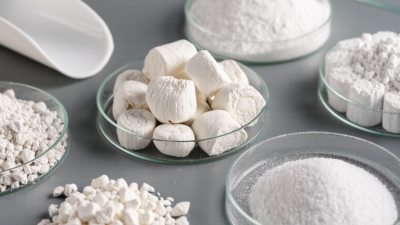
White alumina, often sold as white fused alumina, is a crystalline abrasive made mainly from high-purity alumina. Its pale appearance comes from low levels of coloring impurities, but color alone cannot confirm quality. Look beyond the white grains. Chemistry, grain shape, and size distribution affect how the material behaves in grinding, blasting, or refractory applications.
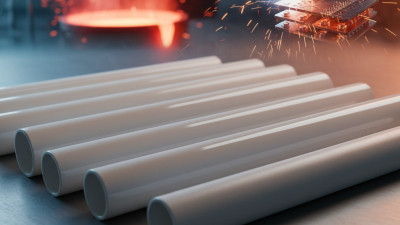
Production begins with refined alumina, which is melted in an electric arc furnace at very high temperatures. The molten material cools into a hard mass, then workers crush, screen, and grade it into selected particle sizes. Some grades receive further cleaning to reduce unwanted particles. The process sounds straightforward. It is not perfectly uniform: furnace conditions and handling can influence grain characteristics between batches. A supplier’s technical data sheet can help buyers check alumina content, particle-size range, and relevant impurity limits. Ask for a representative sample when the application is sensitive. A bright, clean-looking grain may still behave differently from the material used in your process. That detail is easy to miss.
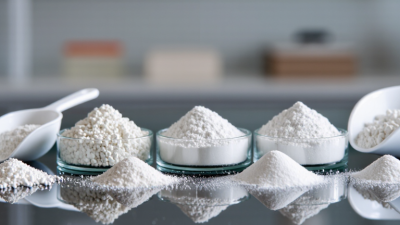
White fused alumina is a high-purity form of aluminum oxide (Al₂O₃), made by melting alumina in an electric arc furnace and cooling it into a crystalline material. Its hardness is approximately 9 on the Mohs scale. Compare this property with other abrasives when assessing material requirements; also consider grit size, purity, and application.
White alumina is a practical choice when a process needs a clean-looking abrasive or a low-iron mineral ingredient. In blast finishing, it can help prepare stainless steel, glass, and ceramic parts without adding dark grit marks. A workshop may use it to remove light scale from a component before coating, or to create a consistent matte finish. The result depends on pressure, nozzle distance, and grain size—not color alone.
Precision finishing is another common application. Fine white alumina grains can be used in abrasive media for lapping or polishing hard materials, including technical ceramics and some optical glass. Small details matter. A coarse grade may leave scratches where a finer cut is needed. Check the supplier’s particle-size range and test it on a sample part before changing a full production line.
White alumina also suits selected refractory and ceramic formulations where high alumina content and low iron are useful. This may matter for kiln furniture, wear-resistant linings, or components exposed to heat. Still, “white” does not guarantee identical chemistry or performance. I would compare purity, grain shape, and batch consistency against the actual process requirements. Not every business needs it; ordinary alumina may be adequate when color transfer and trace contamination are not concerns.
For alumina white, compare the certificate, grain distribution, and performance under your actual operating conditions. “High purity” alone is not a useful buying specification. Ask for alumina content and limits for sodium oxide, iron oxide, and silica. Check whether values describe a typical batch or a guaranteed maximum. Small differences matter.
Grain size changes both cutting action and surface finish. Coarser grains generally remove material faster, while finer grains can produce a smoother finish. ISO 8486-1:2019 specifies sieve-based grain-size distributions for macrogrits; a nominal grit number does not tell the whole story. Request the size range and test method, then trial a small sample on your workpiece. A tidy specification can still miss the point.
Grade selection depends on the application: blasting, refractory use, and precision finishing do not share identical priorities. Compare hardness, particle shape, bulk density, and consistency between lots alongside purity. The USGS Mineral Commodity Summaries 2024 estimated global alumina production at about 140 million metric tons in 2023. That is upstream context, not a white-fused-alumina grade benchmark. One practical check: compare supplier certificates against your own incoming inspection results. A perfect-looking datasheet is not proof of steady performance.
How to Choose the Right Alumina White for Your Business
A supplier’s certificate is a starting point, not proof that every shipment meets your needs. Ask for a lot-specific certificate of analysis covering alumina content, sodium oxide, iron oxide, particle-size distribution, and bulk density. For abrasive use, compare the stated grain-size designation with ISO 8486-1. Request a retained sample and test it against your own process conditions. A sieve result can look acceptable while performance still varies.
Check whether the supplier’s quality-management certification is current and covers the actual production site. ISO 9001 supports process control, but it does not certify product purity. For independent verification, use a laboratory accredited to ISO/IEC 17025 and agree on sampling methods before testing. Small detail. Also confirm traceability: can the supplier connect each bag or pallet to a production lot and test record?
Supply scale deserves context, but it is not a quality score. The USGS Mineral Commodity Summaries 2025 estimated global alumina production at about 145 million metric tons in 2024; this figure covers alumina broadly, not white fused alumina specifically. Ask suppliers how they manage raw-material changes, furnace conditions, and contamination between batches. I would still question any unusually consistent specification without seeing recent test records. Price matters, of course, but a cheaper grade can cost more through rework, dust, or uneven wear.
Choosing alumina white starts with the job it must perform, not the highest specification on a datasheet. For abrasive use, match grit size and particle consistency to the finish and removal rate required. For refractory mixes, check purity, grain sizing, and how the material behaves in the finished formulation. Fit matters more.
A tighter particle-size range or higher purity may improve process consistency, but it can also raise the purchase price. Compare the cost per usable batch, including expected waste, freight, and any screening or handling your plant requires. Ask for a sample and review its certificate of analysis against your own acceptance limits. Test before scaling. A small trial may reveal that a less costly grade performs well enough—or that an apparently minor variation causes rework.
Supply needs matter as much as technical targets. Confirm standard pack sizes, minimum order quantities, typical lead times, and whether repeat batches can stay within agreed specifications. If demand changes seasonally, discuss realistic order intervals rather than paying to hold excess stock. One point is easy to overlook: a customized grade can sound ideal, yet create delays if production depends on a narrow supply window. I would leave room for a practical compromise. The best choice is usually the grade your process can verify, afford, and reliably receive.
| Product Option | Typical Size / Form | Typical Specification Targets | Common Applications | Relative Budget Fit | Supply Planning Considerations |
|---|---|---|---|---|---|
| General-purpose abrasive grain | Common FEPA grit sizes such as F24–F60 | Al₂O₃ typically ≥99%; Na₂O typically ≤0.4%; apparent specific gravity commonly ≥3.90 g/cm³ | Grinding wheels, coated abrasives, blasting and surface preparation | Often a balanced choice for routine production; standard sizes can help limit processing costs | Specify the grading standard and acceptable size distribution; standard grit sizes are generally easier to source than custom cuts |
| Fine abrasive grain | Common FEPA grit sizes such as F80–F220 | Chemistry often similar to general-purpose grain; particle-size distribution and fines limits are key purchasing checks | Fine finishing, precision grinding and surface conditioning | Usually higher processing cost per tonne than coarse standard grain because tighter sizing is required | Confirm the required grit standard and tolerance; request a representative sample if surface finish is critical |
| White alumina micro powder | Fine powder; a typical target may be D₅₀ of about 3–10 μm, depending on grade | Al₂O₃ commonly around ≥99%; particle-size distribution, moisture and agglomeration limits should be agreed | Lapping, polishing, precision finishing and selected refractory or ceramic formulations | Higher relative cost due to fine milling, classification and tighter quality control | Small, frequent orders may be practical; define packaging and moisture protection for storage and transport |
| High-purity white alumina | Available as grains or powders; size depends on the end use | A premium target may specify Al₂O₃ ≥99.5% and tighter limits for Na₂O, Fe₂O₃ and other impurities; verify by lot-specific certificate | Applications where purity, color consistency or controlled contamination is important | Higher relative budget requirement; pay for tighter impurity limits only when the process requires them | Confirm test methods, acceptable limits and batch traceability before placing a volume order |
| Refractory aggregate grade | Coarse fractions such as 0–1 mm or 1–3 mm; actual cuts vary by supplier | Typically evaluated for Al₂O₃ content, Na₂O, bulk density, size distribution and application-specific chemistry | Refractory mixes, castables and other high-temperature formulations | Can be economical for larger-volume use when standard fractions meet the formulation requirements | Match the fraction blend to the recipe; custom sizing or narrow tolerances may affect lead time and cost |
| Purchasing note: Specifications and availability vary by producer, grade and test method. The values above are typical planning targets, not guaranteed product limits. Compare lot-specific certificates of analysis, confirm the applicable FEPA or other sizing standard, and request a current quotation for your required volume and delivery schedule. Budget fit is relative; it is not a market price quote. | |||||