Inquiry
Form loading...

2026 Best Tabular Alumina Types for Global Buyers?

Global buyers comparing the best tabular alumina types in 2026 need more than a grade name or a low quoted price. The right choice depends on the finished product, furnace conditions, and handling requirements. Tabular Alumina is a dense, high-purity alpha-alumina material valued for its thermal stability and low porosity. It is commonly used in refractory castables, bricks, and other high-temperature applications.

Available options often differ in particle size, chemical composition, bulk density, and water absorption. These details can affect packing, workability, and performance in service. A fine fraction may suit a specific formulation, while coarser material may be preferable for another. Small differences matter. Still, a specification sheet cannot predict every result in a working furnace.

Buyers should compare technical data against their own application requirements and request current certificates from suppliers. Ask about grade consistency, production controls, packaging, and shipping conditions. Then assess samples using a relevant test method or a controlled production trial. Test it carefully. Results may vary with the binder, mixing process, and installation method, so supplier claims should be checked in context.

Price and availability also deserve attention, but neither should replace technical fit. A neat comparison table can hide important gaps, especially when suppliers use different test methods or reporting units. That is an easy detail to overlook. This guide outlines key tabular alumina types and practical selection points, while recognizing that no single grade is best for every buyer or application.
2026 Best Tabular Alumina Types for Global Buyers?

What Tabular Alumina Is and How It Is Made

2026 Best Tabular Alumina Types for Global Buyers?

Tabular alumina is a dense, high-purity form of alpha alumina used in refractory products. Its name comes from its flat, tablet-like crystals. Compared with porous, lightweight alumina, it offers strong resistance to heat and chemical attack. That distinction matters. In a furnace lining, dense grains can help limit penetration by slag and molten metal.

Manufacture begins with refined alumina, commonly produced from bauxite through the Bayer process. The material is shaped into small balls, then fired in a high-temperature kiln, typically near 1,900°C. This intense heat promotes crystal growth and densification. After cooling, the nodules are crushed and screened into different sizes. The process sounds straightforward, but kiln conditions affect crystal size, porosity, and consistency. Real batches are not always identical.

The USGS Mineral Commodity Summaries 2025 estimates global bauxite mine production at about 430 million metric tons in 2024, with alumina production near 140 million tons. These figures describe the wider supply chain, not tabular-grade output. Buyers should not treat them as proof of specific-grade availability. For a practical comparison, review alumina content, apparent porosity, bulk density, and particle-size distribution on the technical data sheet. A stated size range alone can hide variation. Ask for batch test results.

Key Properties That Distinguish Tabular Alumina Grades

Tabular alumina grades differ most in purity, density, porosity, and grain size. Published refractory-grade technical data commonly show bulk densities around 3.5–3.6 g/cm³ and apparent porosity near 2–5%. Treat these as comparison ranges, not guarantees: test methods and particle fractions can shift results. Sodium oxide is another useful separator; tighter specifications often target levels around 0.2% or below. Small differences matter. Lower impurities can support performance in demanding refractory mixes, while grain distribution affects packing and water demand.

The USGS Mineral Commodity Summaries 2025 estimates global alumina production at roughly 148 million metric tons in 2024. That figure covers alumina broadly, not tabular material specifically, so it should not be used to infer grade availability. For procurement, compare chemistry alongside bulk density, water absorption, and the stated size fraction. A dense 1–3 mm aggregate may suit a different formulation than fine powder, even when both meet the same purity limit. I would also question any specification that omits its test method.

Tips: Ask for a current certificate of analysis, test methods, and lot-to-lot variation. Check the sample against your actual mix; a paper specification cannot show every handling issue.

Main Tabular Alumina Types and Their Industrial Uses

2026 Best Tabular Alumina Types for Global Buyers?

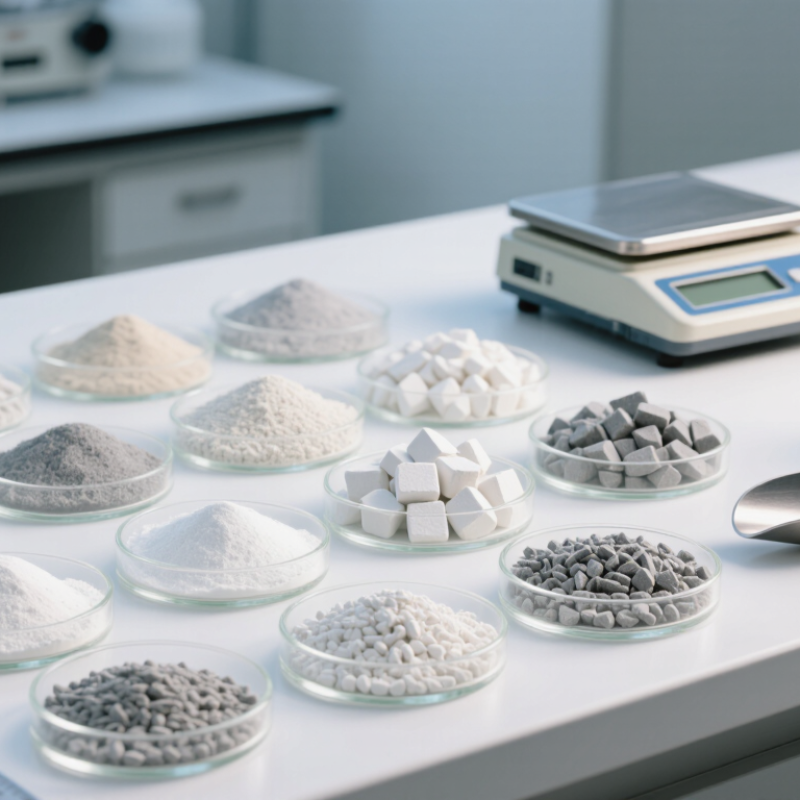
Tabular alumina is a dense, sintered alpha-alumina material supplied in different particle sizes. Coarse grains are commonly used in refractory bricks and castables for steel ladles, cement kilns, and glass furnaces. They help form a durable structure under high heat and repeated thermal cycling. Fine fractions fill spaces between larger grains and support a tighter matrix. Small details matter.

Some suppliers also offer powder or flour grades for refractory mixes and ceramic applications. The right choice depends on the forming process, firing conditions, and required lining performance. Chemistry, bulk density, and particle-size distribution can vary between grades. In practice, “coarse” and “fine” are not always defined the same way across suppliers, so comparing product data carefully is useful. A mismatch can affect flow, packing, or water demand in a castable.

Tips: Check the full size range, not only the nominal grain size. Ask for test data on alumina content and bulk density, then trial the material in your actual mix. One small trial can reveal more than a tidy specification sheet.

2026 Best Tabular Alumina Types for Global Buyers

Main product forms and common industrial uses

The chart shows indicative upper particle-size limits for common tabular alumina product cuts; actual grading varies by specification. Coarse and medium aggregates are used in refractory bricks, castables and ramming mixes. Fine grains and fines are used in refractory castables and ceramic compositions, while alumina flour is used in fine refractory formulations and ceramic applications.

How to Match Tabular Alumina Type to Application Needs

Matching tabular alumina to an application starts with the product form and particle size. Coarse grains suit refractory bricks and castables that need a stable aggregate skeleton. Finer fractions help fill gaps and improve packing. The balance matters: too many fines can increase water demand in a castable, while an unsuitable grading may leave voids. Small details count.

For high-temperature linings, compare chemical composition, bulk density, and particle-size distribution against the service conditions. Steelmaking zones exposed to abrasion may need a dense, well-graded mix. A kiln component with repeated heating and cooling may call for a formulation tested for thermal cycling, not just a high alumina content. Powder and fine grades can also serve ceramic formulations, where consistency affects shaping and firing. Check the technical data and, where possible, trial the material in the actual mix. Lab results help, but they do not perfectly predict installation behavior. The choice is not always tidy. Small shifts in binder, water, or firing conditions can change performance. A practical match considers the full recipe, installation method, and operating environment—not the material name alone.

Global Buyer Checklist for Sourcing Tabular Alumina in 2026

2026 Best Tabular Alumina Types for Global Buyers?
Global Buyer Checklist for Sourcing Tabular Alumina in 2026

Global buyers should compare tabular alumina by grain size, chemistry, density, and intended refractory use. Coarse fractions, fines, and powders serve different mixes; a similar product name does not guarantee equivalent performance. Request a current technical data sheet and a certificate for each lot. Small differences matter. Check alumina content, sodium oxide, iron oxide, bulk density, and water absorption against your own specification.

The USGS Mineral Commodity Summaries 2025 reports global alumina production at roughly 140 million metric tons in 2024. This figure covers alumina broadly, not tabular alumina alone. It shows the scale of the upstream market, but cannot confirm a supplier’s capacity or shipment consistency. Ask for recent production and delivery records, then verify a representative sample through independent testing.

Before ordering, confirm particle-size distribution, packaging weight, moisture protection, and batch traceability. For a trial, test the material in the actual castable or brick formulation; laboratory values alone may not predict plant results. Request written details for tolerances and replacement procedures. Compare landed cost, not just the quoted price, including freight, handling, and expected losses. One checklist can still miss a detail. Review the first shipment carefully, and revise your specification when field results disagree with the data sheet.

2026 Best Tabular Alumina Types for Global Buyers? — Global Buyer Checklist for Sourcing Tabular Alumina in 2026

Compare tabular alumina by product form, particle size, end use, and quality-control requirements. The most suitable grade depends on the formulation and installation method; confirm all limits against the intended application and the supplier’s current technical data sheet.

Product type or fraction Common commercial description Typical use Key specification checks Buyer acceptance checks Sourcing and logistics checks
Coarse aggregate Screened size fractions such as 3–5 mm or 5–8 mm; available cuts vary by producer. Monolithic refractory mixes, castables, and other formulations requiring a coarse aggregate fraction. Requested sieve range, oversize and undersize limits, alumina content, and impurity limits. Request a sieve-analysis report for the supplied lot; check for contamination, excess fines, and inconsistent sizing. Confirm moisture protection, package integrity, net weight, and whether each size fraction is packed separately.
Medium aggregate Commonly specified cuts include 1–3 mm; exact grading and tolerances are order-specific. Refractory castables and mixes where a controlled intermediate aggregate fraction is required. Sieve distribution, particle shape requirements if applicable, chemistry, and lot-to-lot consistency. Compare the certificate of analysis with the purchase specification and verify the agreed test method. Confirm grade identification on each bag and protection from mixing during handling and transit.
Fine aggregate Fine screened cuts such as 0–1 mm; available ranges depend on the product program. Refractory mixes and castables that require smaller aggregate particles for the specified grading design. Fine-end and coarse-end sieve limits, fines content, chemistry, and moisture condition. Use the agreed sieve series and sampling plan; do not rely on a size label alone. Check that bags are sealed against moisture ingress and that labels distinguish this fraction from coarser grades.
Tabular alumina fines Fine powder or small-particle fractions, often sold with a specified top size or sieve distribution. Refractory formulations and blends where fine tabular alumina is required; suitability depends on the formulation. Particle-size distribution, residue on specified sieves, chemistry, and moisture. Ask for particle-size data using a stated method and verify that the method matches the contract. Assess dust-control and sealed-packaging requirements for filling, storage, and unloading.
Low-soda tabular alumina A chemistry-controlled grade offered with a defined sodium oxide limit; “low soda” is not a universal threshold. Applications where the buyer’s formulation or process places a specific limit on sodium-bearing impurities. Contractual Na2O maximum, Al2O3 content, and other agreed impurity limits. Specify numerical limits and test methods in the purchase order; review lot-specific analysis rather than a generic grade name. Confirm that the same chemistry limits apply to every size fraction and that change control is documented.
Blended size package Two or more size fractions supplied to an agreed blend recipe or particle-size distribution. Refractory mixes designed around a specified aggregate blend and packing distribution. Blend proportions, component grading, chemistry, and the final blend’s specified particle-size distribution. Define whether the supplier or buyer performs blending; verify blend uniformity and sampling procedure. Confirm batch identification, traceability of component lots, and protection against segregation during transport.
Any grade — core quality review Sintered alpha-alumina aggregate supplied in a specified size, chemistry, or product form. Refractory applications selected according to the system design and service conditions. Chemical analysis, size distribution, apparent porosity or other agreed physical properties, and test methods. Request a current technical data sheet, lot-specific certificate of analysis, sampling plan, and written tolerances. Confirm origin documentation, packaging, moisture protection, palletization, shipment terms, lead time, and applicable import requirements.

Specification note: Size ranges shown are examples of commonly used commercial descriptions, not universal standards or guaranteed tolerances. Set numerical acceptance limits, test methods, sampling frequency, packaging, and documentation requirements in the purchase contract.