Top Tabular Alumina Manufacturers for Global Buyers
For global buyers, selecting reliable Tabular Alumina manufacturers requires more than comparing price per tonne. Quality begins with stable calcination, controlled crystal growth, and clean packaging. These details affect density, corrosion resistance, thermal shock performance, and installation results.
The USGS Mineral Commodity Summaries 2024 estimated global alumina production at roughly 140 million metric tons in 2023. The International Aluminium Institute also reports sustained alumina demand from refractories, ceramics, and advanced industrial applications. However, these reports usually cover alumina broadly. They do not always separate tabular grades clearly. That limitation matters.
Dr. William E. Lee, a respected refractory-materials researcher, has emphasized, “Performance begins with microstructure, not with a chemistry table.” Buyers should therefore examine apparent porosity, bulk density, Na2O content, particle sizing, and firing consistency. A polished datasheet is not enough. Ask for recent inspection records, batch traceability, and independent test results. Confirm whether the supplier operates its own calcination facilities or relies on outside processing.
Market reports also disagree about growth rates and regional demand. This is not necessarily a flaw. Different studies use different product boundaries and forecasting methods. Still, it requires careful judgment. The strongest manufacturers can explain their process in practical terms. They should show how a 1–5 millimeter fraction behaves in a refractory mix, not merely provide a laboratory number. Global buyers need dependable material, transparent evidence, and realistic delivery commitments. Price matters, but inconsistent Tabular Alumina can cost far more during installation and service.

What Tabular Alumina Is and Why Global Buyers Use It
What Tabular Alumina Is and Why Global Buyers Use It
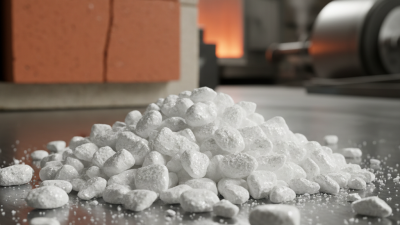
Tabular alumina is a dense, sintered form of alpha alumina with large, well-developed crystals. Manufacturers produce it by shaping calcined alumina, firing it at very high temperatures, and cooling it rapidly. This process creates low apparent porosity, strong thermal stability, and resistance to corrosion from molten metals and slags.
Global buyers use tabular alumina in steel ladle linings, castables, kiln furniture, and advanced ceramics. It performs well where repeated heating and cooling cause ordinary aggregates to crack. The 2024 USGS Mineral Commodity Summaries reported roughly 140 million metric tons of global alumina production in 2023. However, the report does not separate tabular alumina, so market comparisons remain imperfect. That limitation matters when evaluating supplier claims.
World Steel Association data recorded about 1.89 billion metric tons of crude steel production in 2023. This large industrial base supports ongoing demand for high-performance refractory materials. In practice, buyers should examine bulk density, water absorption, alumina purity, particle-size distribution, and thermal-shock performance. A certificate alone may not reveal handling losses or batch variation. Requesting a recent test report and a small trial shipment is wiser.
Details matter.
Experienced purchasing teams also check packaging strength, moisture protection, export documentation, and delivery consistency. Price per ton can mislead when lower density increases consumption. The best specification depends on furnace design, binder chemistry, operating temperature, and slag exposure. Suppliers rarely match every application perfectly. That is where technical review—and honest reconsideration—becomes necessary.
Key Specifications for Comparing Tabular Alumina Manufacturers
When comparing top tabular alumina manufacturers, buyers should examine specifications before production scale.
Tabular alumina usually contains over 99% Al2O3. However, purity alone does not predict refractory performance.
Request data for Na2O, SiO2, Fe2O3, bulk density, apparent porosity, and particle-size distribution. Low-soda grades may contain below 0.10% Na2O, but testing methods can differ.
ASTM C20 provides recognized procedures for apparent porosity, water absorption, and bulk density. ISO 10081-1 also supports refractory classification. The USGS Mineral Commodity Summaries 2024 reported global alumina production near 140 million metric tons in 2023. This figure covers broad alumina output, not tabular material, yet it shows why feedstock traceability matters. Ask manufacturers for recent certificates of analysis, lot numbers, and sampling procedures.
Tips:
Compare at least three consecutive lots, not one attractive sample. Check whether particle sizes match your batching system. A 0–1 mm fraction may behave differently from 1–3 mm material during mixing.
Confirm calcination conditions and crystal structure through technical documentation. Bulk density should be measured under the same method across suppliers. A low impurity result can still mislead when moisture, screening loss, or test temperature is omitted.
I have seen specifications look excellent on paper, while inconsistent granulation caused mixing problems. That detail deserves more attention.
Audit laboratory competence, production capacity, packaging protection, and delivery records before final approval. Supplier claims should remain unverified until independent testing confirms them.
Leading Manufacturer Profiles and Their Market Strengths
Leading Manufacturer Profiles and Their Market Strengths
Tabular alumina suppliers generally fall into three profiles. Integrated alumina producers offer scale, stable feedstock, and stronger shipment continuity. The International Aluminium Institute reported global alumina production near 140 million tonnes in 2023. This scale supports dependable raw-material access, but it does not guarantee specialty-grade performance. Buyers should examine calcination temperature, crystal size, and batch consistency.
Specialty refractory producers compete through tighter specifications and technical service. Their strengths include low sodium content, controlled porosity, and tailored particle distributions. These features matter in steel ladles, kiln furniture, and high-temperature ceramics. Regional processors can offer faster delivery and smaller minimum orders. However, their export capacity may be less resilient during energy or freight disruptions. The 2024 USGS Mineral Commodity Summaries highlighted continuing concentration in global alumina supply. That concentration increases the value of dual sourcing.
A credible manufacturer should provide recent test certificates, traceable production records, and clear sampling methods. ISO-based quality systems help, but they are not enough. Independent testing remains useful. I would also compare loss on ignition, apparent density, and abrasion behavior under actual service conditions. Supplier claims can look precise. Real furnace results may disagree. That is where many purchasing evaluations become incomplete. The strongest profile combines production depth, responsive engineering support, and transparent data rather than relying on capacity alone.
How Global Buyers Can Evaluate Suppliers and Manage Purchasing Risks
Top Tabular Alumina Manufacturers for Global Buyers
Global buyers should evaluate tabular alumina suppliers beyond quoted price. The USGS Mineral Commodity Summaries 2024 reported global alumina production at about 140 million metric tons in 2023. This scale shows a mature upstream market, but it does not guarantee consistent tabular alumina quality. Buyers should request recent certificates of analysis, production-lot traceability, and test methods for purity, bulk density, water absorption, and particle-size distribution. Ask for retained samples from the same lot planned for shipment. Samples can mislead.
Manufacturing control matters. Inspectors should compare furnace temperature records, screening controls, packaging conditions, and warehouse humidity protection. A reliable supplier should explain how it handles off-specification material, not only display a polished quality manual. ISO 9001 certification can support process discipline, yet it is not proof of product performance. Independent testing remains necessary, especially before a large annual contract. A simple trial order may reveal dust levels, crushed particles, and inconsistent bag weights.
Purchasing risk also includes logistics. The World Bank’s Logistics Performance Index 2023 evaluates customs, infrastructure, shipment arrangements, logistics quality, and timeliness. Buyers should therefore assess the supplier’s export documentation, port options, lead-time history, and contingency stock. Use clear delivery terms, inspection rights, and batch-based payment milestones. In practice, a delayed vessel can interrupt a refractory production line within days. Dual sourcing reduces exposure, although it may increase qualification costs. That trade-off deserves honest calculation.
Top Tabular Alumina Manufacturers for Global Buyers
How global buyers can evaluate suppliers and manage purchasing risks through technical specification checks.
The chart shows commonly used reference ranges for high-purity tabular alumina qualification. Buyers should compare each supplier’s certificate of analysis, test method, batch consistency, packaging condition, and independent inspection results before placing an order. Exact limits vary by grade and application.