Global buyers are searching for more than attractive glaze and competitive pricing. They need dependable Made Ceramics suppliers with stable production, clear documentation, and repeatable quality.
ACIMAC’s 2024 World Production and Consumption of Ceramic Tiles report recorded global tile production at roughly 16 billion square metres in 2023. That volume shows the industry’s scale, but scale alone does not guarantee reliability. Grand View Research also identifies continued growth in advanced ceramics, driven by electronics, healthcare, energy, and transportation. Buyers must therefore examine each supplier’s actual capabilities, not merely its catalogue.
Look closely.
A serious supplier should explain clay composition, firing temperature, water absorption, dimensional tolerance, packaging strength, and inspection procedures. Factory audits, ISO 9001 certification, laboratory test reports, and sample approvals can reveal practical differences. Some suppliers offer beautiful samples, yet struggle with colour consistency across large orders. That weakness deserves attention.
Bernard Leach, a major figure in modern ceramics, described pottery as “the art of earth, water, air and fire.” His observation remains useful for global sourcing. Materials, process control, and human judgement still shape every finished piece. However, this introduction should not pretend that one ranking suits every buyer. A restaurant may prioritise chip resistance, while an electronics manufacturer needs dielectric stability. Freight distance, customs paperwork, sustainability evidence, and after-sales communication also affect the final cost.
The suppliers discussed in this guide are evaluated through a practical lens. Their strengths, limitations, certifications, production focus, and export experience matter. No supplier is perfect. Careful comparison remains essential before signing a purchase agreement.
Ceramic Suppliers: Industry Scope, Product Types, and Global Demand
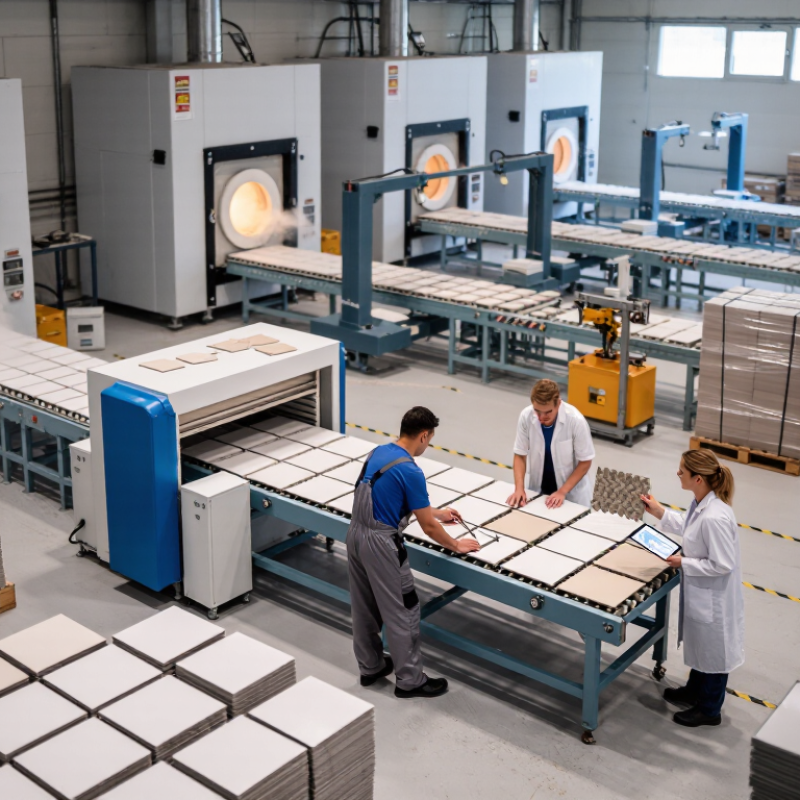
The ceramic supply industry serves construction, hospitality, retail, healthcare, and household markets. Suppliers commonly produce wall tiles, floor tiles, sanitaryware, tableware, technical ceramics, and decorative pieces. Each category requires different firing temperatures, glazing methods, and quality controls. For example, floor tiles need strong abrasion resistance, while tableware requires smooth surfaces and food-contact safety testing.
Global demand is shaped by urban construction, home renovation, hotel development, and changing consumer preferences. Buyers often compare water absorption, dimensional accuracy, packaging strength, and production capacity. Export experience also matters because moisture, vibration, and temperature changes can damage poorly packed ceramics. Experienced suppliers usually provide samples, inspection records, material specifications, and realistic lead times. However, no sourcing model is perfect. Sample approval may not fully reflect mass production.
Tips: Request a small trial order before signing a large contract. Check glaze consistency under natural light. Ask how defects are classified and recorded. Confirm carton strength, pallet design, and replacement procedures. A reliable supplier should answer clearly, not simply promise the lowest price. Also review certificates relevant to the destination market, since requirements differ across regions. Some buyers overlook after-sales communication. That mistake can become expensive.
Choosing top ceramic suppliers for global buyers requires more than comparing catalog prices. Review their production experience, material knowledge, and export history. Ask how they control clay moisture, firing temperature, glaze consistency, and dimensional tolerance. A reliable supplier should provide recent inspection records and clear product specifications.
Request samples before placing a large order. Check the surface under strong light. Look for pinholes, uneven glaze, hairline cracks, and rough edges. Measure each sample with a simple caliper. Also examine packaging after simulated transport. One supplier may offer beautiful samples but weak cartons. That detail can become expensive.
Tips:
Confirm minimum order quantities, lead times, packaging methods, and replacement policies in writing. Ask whether production follows an approved sample. A factory visit or live video inspection can reveal useful details, including workspace cleanliness and labeling practices. Verify testing documents through independent laboratories when safety or durability matters.
Communication quality also deserves attention. Delayed replies often signal future coordination problems, though not always. I once overlooked a small tolerance difference, and the final shipment required extra sorting.
Buyers should leave room for human error, while demanding measurable corrective action. Reliable partnerships grow from evidence, not confident promises.
China remains the world’s largest ceramic manufacturing region, supported by extensive raw-material networks, automated kilns, and high-volume tile production. Ceramic World Review 2024 estimated global ceramic tile output at about 16.7 billion square meters in 2023. China and India together contributed more than half of that volume. China suits buyers needing broad product ranges, stable capacity, and competitive pricing.
India has become a strong alternative for sanitaryware, wall tiles, and digitally printed surfaces. Its Morbi cluster offers dense supplier networks and flexible production runs. However, capacity does not always equal consistent quality. Buyers should inspect firing records, water absorption results, and batch color controls before placing large orders. That distinction matters.
Italy and Spain remain influential in design-led ceramics, especially large-format slabs, technical porcelain, and surface engineering. Their strengths include advanced glazing, precision cutting, and strict process documentation. Industry trade data from UN Comtrade also shows strong international ceramic flows from these European producers, despite higher labor and energy costs. Turkey and Vietnam provide useful middle-ground options, combining export experience with competitive manufacturing costs. Still, supplier comparisons can be too simple. A lower quotation may hide weaker packaging, higher breakage, or longer correction cycles. Test orders reveal more than brochures.
Approximate ceramic tile production by leading manufacturing country, 2023
Asia remains the largest ceramic manufacturing base, led by China and India, with strong capabilities in high-volume wall and floor tiles, sanitaryware, and construction ceramics. Brazil and Vietnam are important cost-competitive production centers, while Spain and Italy are recognized for advanced design, premium finishes, large-format tiles, and technology-intensive manufacturing.
Data source: Rounded 2023 industry estimates based on publicly reported ceramic tile production statistics. Values are shown in billion square meters and are intended for regional market comparison.
Top Made Ceramics Suppliers for Global Buyers
Global buyers should compare test evidence, not polished catalogs. Grand View Research estimated the global ceramics market at over USD 300 billion in 2023, with construction and technical applications driving demand. That scale creates many suppliers, but quality still varies between batches. Ask for water absorption, flexural strength, dimensional tolerance, and glaze resistance results. Request samples from current production, not only showroom pieces. Small details matter.
Pricing needs a complete cost view. Compare ex-factory prices with packaging, inspection, insurance, freight, duties, and breakage allowances. A cheaper tile may require thicker cartons or more replacement stock. The World Bank’s Logistics Performance Index shows that delivery reliability strongly affects international trade costs. Therefore, buyers should review lead times, loading photos, and shipment records. A low quote can still be a bad deal.
Certifications should be verified carefully. ISO 9001 certification can indicate a controlled quality system, while ISO 14001 addresses environmental management. These certificates do not prove every ceramic item is excellent. Check the certificate scope, issuing body, validity, and factory address. For construction products, request testing against relevant EN, ASTM, or national standards. SGS industry guidance also stresses traceability and independent inspection for higher-risk shipments. I would not rely on one report alone. Compare at least three suppliers, repeat critical tests, and record every tolerance in the purchase contract.
| Ceramic Product Category | Key Quality Indicators | Relevant Technical Standards | Indicative Export Price | Certifications and Compliance Documents | Buyer Verification Method |
|---|---|---|---|---|---|
| Glazed Ceramic Wall Tiles | Water absorption commonly above 10%; consistent dimensions; uniform glaze coverage; resistance to crazing and staining. | ISO 10545 series; ISO 13006; EN 14411, commonly Group BIII for high-absorption wall tiles. | Approximately US$3–10 per m², depending on size, finish, decoration, packaging, and order volume. | ISO 9001 quality-management certification; product test report; batch inspection record; applicable packaging and chemical-compliance declarations. | Request samples from the same production batch and compare dimensions, shade variation, glaze defects, water absorption, and carton labeling. |
| Porcelain Floor Tiles | Water absorption not exceeding 0.5%; high breaking strength; low warpage; abrasion and slip performance matched to the intended use. | ISO 10545-3 for water absorption; ISO 10545-4 for breaking strength; ISO 10545-6 for deep abrasion; ISO 13006 and EN 14411, commonly Group BIa. | Approximately US$5–20 per m² for standard commercial products; premium finishes and large formats may cost more. | ISO 9001; test report covering absorption and strength; slip-resistance documentation where required; environmental declarations when requested. | Check independent laboratory results, calibrated dimensional measurements, shade consistency, edge straightness, and performance suitability for wet or high-traffic areas. |
| Outdoor and Heavy-Duty Tiles | Low water absorption; high breaking strength; suitable slip resistance; resistance to frost, thermal shock, chemicals, and abrasion where applicable. | ISO 10545-3, ISO 10545-4, ISO 10545-12 for frost resistance, ISO 10545-13 for chemical resistance, and ISO 10545-6 for abrasion. | Approximately US$8–25 per m², depending on thickness, surface treatment, format, and technical performance. | ISO 9001; frost-resistance report for cold climates; slip-resistance test; technical data sheet; installation and maintenance instructions. | Match the product test results with the destination climate, expected loading, installation method, and local building-code requirements. |
| Ceramic Mosaics | Accurate sheet alignment; consistent tessera size; strong mesh or paper backing; uniform color and reliable bonding performance. | ISO 10545 series where applicable; ISO 13006; adhesive and grout performance should be assessed under the relevant construction standard. | Approximately US$8–35 per m², influenced by material, pattern, surface finish, sheet format, and manual processing. | ISO 9001; product specification sheet; color-control record; adhesive compatibility information; packaging and palletization details. | Inspect full sheets rather than single pieces and conduct a trial installation to assess joints, alignment, bonding, and visual continuity. |
| Sanitary Ceramic Ware | Glaze uniformity; dimensional accuracy; functional flushing or drainage performance; resistance to crazing, stains, chemicals, and thermal shock. | Applicable ISO product standards, including ISO ાણ? 3815 and destination-market plumbing standards; confirm the exact standard for each product type. | Approximately US$20–100 per piece for standard export products, excluding fittings, freight, and project-specific customization. | ISO 9001; plumbing-performance test report; water-efficiency documentation where required; lead and other restricted-substance declarations for the destination market. | Verify dimensions, connection points, water consumption, surface defects, spare-part availability, and compatibility with local plumbing systems. |
| Ceramic Tableware | Food-contact safety; resistance to thermal shock, chipping, crazing, staining, dishwasher cycles, and microwave use where claimed. | ISO 6486 for release of lead and cadmium from ceramic ware; destination-market food-contact regulations; relevant thermal-shock and durability test methods. | Approximately US$1–15 per piece for standard products, depending on shape, decoration, packaging, and order quantity. | ISO 9001; food-contact test report; lead and cadmium migration results; material declaration; dishwasher and microwave test evidence when advertised. | Use an accredited laboratory report dated for the current product formulation and verify that decoration is covered by the test sample. |
| Large-Format Sintered or Ceramic Panels | Flatness; dimensional stability; internal strength; cut-edge quality; resistance to thermal shock, stains, chemicals, and surface abrasion. | Applicable ISO 10545 tests; ISO 13006 where classified as ceramic tile; project-specific structural, handling, and installation requirements. | Approximately US$20–80 per m², depending on thickness, size, surface design, reinforcement, and processing. | ISO 9001; product test report; installation manual; handling and cutting guidance; environmental and chemical-compliance documents where required. | Approve a full-size mock-up, review allowable tolerances, confirm crate design, and assess breakage risk during loading, transit, cutting, and installation. |
Selecting a ceramics supplier involves more than comparing unit prices. Importers should verify production capacity, quality controls, firing methods, and export experience. Ask for recent samples, test reports, and clear photos of packed goods. A reliable supplier should explain glaze variation, dimensional tolerance, and acceptable defect rates.
Logistics can decide whether a profitable order arrives safely. Confirm the correct customs classification, commercial invoice, packing list, and country-of-origin documents before shipment. Agree on Incoterms, insurance responsibilities, and delivery milestones in writing. Ceramic products need strong cartons, internal separators, corner protection, and stable pallet stacking. A small packaging weakness can create hundreds of broken pieces.
Partnerships improve when communication is practical and measurable. Set inspection points before production, before loading, and after delivery. Discuss minimum order quantities, replacement procedures, payment schedules, and seasonal capacity early. Keep one approved sample as the reference standard. No plan is perfect. Port delays, color variation, and changing freight costs still require patience and quick decisions. Buyers should review supplier performance after every shipment, including breakage rates, response time, and document accuracy. Some agreements look efficient on paper but fail under pressure. Regular reviews reveal that gap.