Choosing the right Porous Ceramic manufacturer requires more than comparing catalog prices. Global buyers must examine material consistency, production capacity, testing practices, and communication standards. A supplier may offer attractive samples but struggle with stable performance during larger orders. That difference matters in filtration, thermal insulation, fluid control, and laboratory applications.
This guide introduces leading manufacturers serving international markets. It considers technical experience, manufacturing equipment, quality systems, and practical export support. Important details include pore size distribution, open porosity, mechanical strength, thermal resistance, surface finish, and dimensional tolerance. Reliable manufacturers should provide clear specifications, inspection records, and traceable production information. Ask for samples.
Factory capability also deserves close attention. A serious producer should explain its forming methods, sintering temperatures, machining options, and quality checkpoints. Buyers can request photographs of production lines, sample test reports, and references from comparable industries. These steps cannot remove every risk, but they make decisions more evidence-based.
No ranking is flawless. A manufacturer strong in alumina components may not suit silicon carbide filter elements. Regional delivery time, certification requirements, minimum order quantities, and after-sales responsiveness can change the final choice. Some suppliers communicate confidently but provide limited technical evidence. That should invite careful review, not immediate rejection. Experience teaches caution.
The manufacturers discussed here are evaluated through a buyer-focused lens. Their value depends on repeatable quality, honest documentation, and the ability to support real operating conditions. Global sourcing works best when technical questions are answered directly. Small details often reveal the difference.
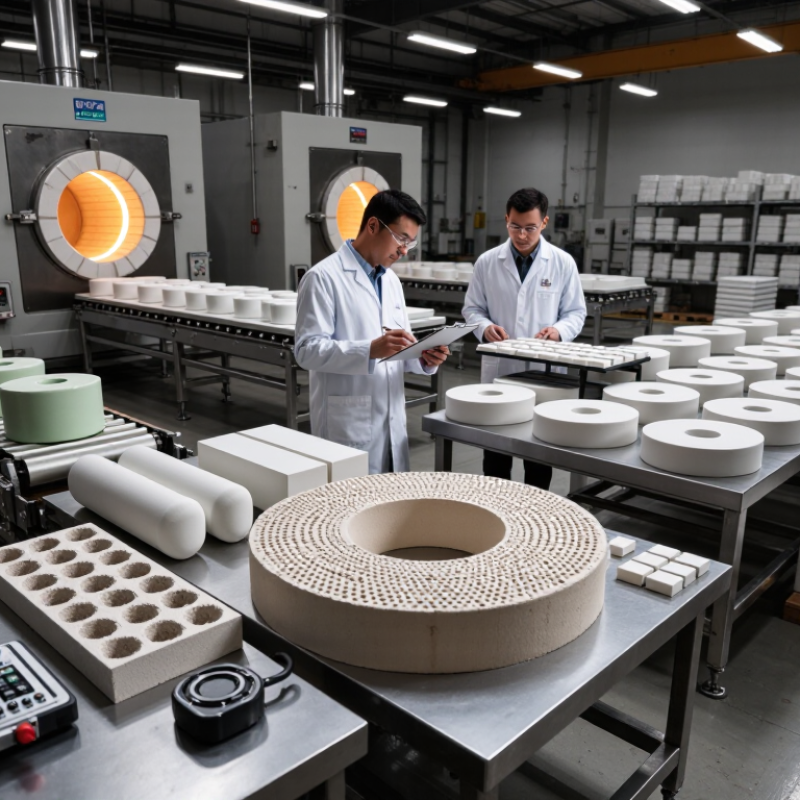
Porous ceramics are inorganic materials containing tiny, controlled voids throughout their structure. These pores may connect with one another or remain sealed inside the body. Their size, shape, and distribution affect airflow, liquid movement, strength, and heat transfer. The difference matters. A ceramic with open pores can filter gases, while closed pores may improve insulation.
Global buyers use porous ceramics in industrial filtration, laboratory equipment, burner systems, and thermal barriers. They also appear in liquid diffusers, catalyst supports, vacuum chucks, and selected medical components. For example, a porous diffuser can release fine bubbles through a tank, improving gas distribution. A filter element may remove particles while tolerating high temperatures that polymer materials cannot withstand. Small pores clog. Large pores may reduce filtration accuracy.
When comparing manufacturers, buyers should request pore-size data, porosity results, compressive strength, thermal-shock testing, and chemical-resistance records. Manufacturing methods include pressing, extrusion, foaming, and controlled sintering. Each method creates different tolerances and surface conditions. Machining can improve dimensions, but it may weaken thin walls or expose hidden defects. Glazing may seal the surface, which is useful for some designs but harmful when permeability is required. Specifications alone are not enough. Sample testing under real temperature, pressure, and fluid conditions remains essential. Some supplier data looks precise, yet the test method may differ from the buyer’s process. That detail deserves careful review.

Top Porous Ceramic Manufacturers for Global Buyers?
How to Evaluate Porous Ceramic Manufacturers Worldwide
Choosing a porous ceramic manufacturer requires more than comparing catalog prices. The real test is consistent performance under your operating conditions. Ask for pore-size distribution, open porosity, permeability, thermal-shock data, and chemical compatibility. These figures should come from defined test methods, not vague marketing language.
Request samples made from the same material and process proposed for production. Examine surface uniformity, wall thickness, dimensional tolerance, and visible cracking. A reliable supplier should explain forming, firing, machining, cleaning, and inspection steps. Factory experience matters here. Engineers who understand kiln variation can identify risks before shipment. Still, one sample cannot prove long-term stability. That is an easy mistake.
Evaluate production capacity without assuming a large facility is automatically better. Review batch records, calibration practices, traceability, and nonconformance handling. Ask how the manufacturer controls raw-powder changes and rejects defective parts. Audits, technical drawings, and independent laboratory reports can strengthen confidence. However, documents may be outdated, incomplete, or prepared for another grade. Verify dates and match every report to your specification.
Global purchasing also depends on communication. Confirm packaging, moisture protection, lead times, replacement policies, and export documentation. Discuss pilot orders before committing to volume. A thoughtful manufacturer will question unrealistic tolerances instead of accepting every request. I would also record unanswered questions. Silence can reveal more than a polished presentation.
This 100-point buyer scorecard prioritizes measurable technical performance, quality control, customization capability, compliance, and international supply reliability. Buyers can use these dimensions to compare manufacturers without relying on brand names.
Leading porous ceramic manufacturers serve different needs through specialized products and industries. Manufacturers producing porous ceramic tubes and plates often support industrial filtration, wastewater treatment, and chemical processing. Their products must maintain stable pore sizes, withstand pressure, and resist corrosive fluids. Ceramic diffusers are common in aeration systems, where even bubble distribution affects oxygen transfer. Honeycomb structures suit exhaust treatment and thermal systems because they combine low weight with large surface areas.
Product quality depends on more than material names. Experienced manufacturers should provide pore-size data, permeability results, compressive strength, and thermal-shock performance. They should also explain how firing temperature changes shrinkage and porosity. For electronics and laboratory equipment, tight dimensional control matters. For food and water applications, traceability and cleanable surfaces deserve closer attention. Ask for samples.
Real operating conditions can expose weaknesses. A filter that performs well with clean water may clog quickly in mineral-rich service. Test reports may also reflect ideal laboratory settings, not daily production. This is where manufacturer experience becomes valuable. Buyers should compare pilot results, machining tolerances, packaging methods, and technical support. No supplier fits every industry. Even careful specifications may need revision after field testing. That uncertainty is worth acknowledging before placing a large order.
Global buyers should judge porous ceramic manufacturers through measurable quality standards, not attractive product photos. Ask for pore-size distribution, open porosity, water absorption, permeability, and dimensional tolerance. These values should match the intended filtration, insulation, support, or fluid-handling application.
Request recent test reports from competent laboratories. The reports should identify testing methods, sample preparation, temperature, pressure, and batch numbers. Compressive strength matters when parts face vibration or stacking loads. Thermal shock testing is essential for repeated heating and cooling.
Chemical compatibility testing should reflect the actual fluids, not only distilled water. Small differences matter.
A reliable supplier should provide a quality-management certificate, material traceability, inspection records, and a clear nonconformance process. Check whether production samples match the approved sample. They sometimes do not. That is worth questioning.
Inspect surface defects, blocked pores, warping, chips, and uneven glazing when applicable. Measure several pieces, not one perfect sample. Packaging also deserves attention. Porous ceramics can absorb moisture and suffer impact damage during long-distance transport. Use sealed protection, cushioning, and batch labels.
Do not accept “high quality” as a specification. Define acceptance limits in writing. An independent pre-shipment inspection can verify them. Still, laboratory data has limits. Pore behavior may change after machining, firing, or chemical exposure. Application trials remain necessary, even when the paperwork looks complete.
Comparing porous ceramic manufacturers requires more than checking the lowest quoted price. MarketsandMarkets’ 2024 Advanced Ceramics Market report projects strong growth through 2028, driven by filtration, medical, energy, and thermal applications. This growth can attract new suppliers, but capacity claims need evidence. Request material composition, pore-size distribution, density, compressive strength, and test methods. Ask for recent batch records, not only a polished sample.
Pricing should be separated into ceramic bodies, machining, tooling, inspection, packaging, and freight. A supplier quoting 2.80 dollars per filter may appear cheaper than one quoting 3.40 dollars. However, the cheaper item may have lower yield or higher breakage. Compare usable pieces per batch. Include minimum order quantities, replacement rates, payment terms, and Incoterms. Small details matter. Energy-intensive sintering can also change prices when production schedules shift.
Export capability deserves equal attention. Request a commercial invoice, packing list, certificate of origin, safety data where applicable, and clear customs descriptions. The World Bank’s Logistics Performance Index shows major differences in shipment reliability between trading environments, so delivery promises should include port handling and inspection time. Confirm whether the factory has shipped similar ceramic sizes internationally. Video evidence helps, though it is not proof. I would also test one pilot order before signing a yearly contract. That step feels slow, but rushing has often cost more.
Anonymized comparison based on common international market specifications and indicative export terms
| Supplier Profile | Typical Production Region | Main Ceramic Materials | Typical Porosity | Common Products | Typical Operating Temperature | Indicative Export Price | Typical MOQ | Typical Lead Time | Export Capability | Best Fit |
|---|---|---|---|---|---|---|---|---|---|---|
| Profile A: High-Volume Industrial Producer | East Asia | Alumina, cordierite, silicon carbide | 30%–55% | Filter tubes, diffuser plates, porous blocks, kiln components | 600–1,600°C, depending on material and design | US$8–45 per standard piece; custom parts quoted separately | 100–500 pieces | 25–50 days after drawing approval | Regular container consolidation, export packing, commercial invoices, packing lists, and standard customs documents | Large-volume orders and cost-sensitive industrial projects |
| Profile B: Technical Custom-Molding Specialist | Central Europe | Alumina, zirconia, mullite, porous technical ceramics | 25%–50% | Precision filter elements, laboratory components, catalyst supports, custom assemblies | 800–1,800°C, subject to ceramic grade | US$25–180 per piece for engineered components | 10–50 pieces | 6–12 weeks, including tooling or prototype work | Strong technical documentation, dimensional inspection reports, material traceability, and palletized export packing | High-precision applications and low-to-medium volume programs |
| Profile C: Porous Ceramic Membrane Producer | Western Europe | Alumina, zirconia, titania, ceramic membrane composites | 30%–45%; membrane layers may have submicron pores | Microfiltration and ultrafiltration membranes, tubular modules, membrane supports | Up to approximately 300–500°C in many liquid-filtration systems | US$150–1,200 per module, depending on area and configuration | 1–10 modules | 8–16 weeks for configured systems | International freight coordination, application testing, operating manuals, and system-level technical support | Water treatment, chemical processing, food, and pharmaceutical filtration |
| Profile D: Porous Diffuser and Aeration Manufacturer | North America | Alumina, silica-based ceramics, fused mineral compositions | 25%–45% | Air diffusers, gas spargers, bubbling tubes, aquarium and wastewater aeration parts | Generally up to 200–500°C, depending on product design | US$12–85 per diffuser or sparger | 25–100 pieces | 4–8 weeks for standard items | Small-parcel and pallet shipping, export labeling, product data sheets, and replacement-part support | Wastewater, aquaculture, laboratory gas dispersion, and process aeration |
| Profile E: Porous Ceramic Foam Producer | East Asia and Southeast Asia | Silicon carbide, alumina, zirconia, ceramic foam composites | 70%–90% | Ceramic foam filters, thermal insulation panels, burner media, molten-metal filtration blocks | 800–1,600°C, with silicon carbide grades generally used for higher temperatures | US$5–60 per piece or US$20–120 per square meter | 50–300 pieces | 20–45 days | Bulk export experience, moisture-resistant packing, container loading, and basic inspection certificates | Foundries, high-temperature equipment, combustion systems, and thermal management |
| Profile F: Laboratory and Small-Batch Manufacturer | Japan and South Korea | High-purity alumina, zirconia, porous glass-ceramics | 20%–45% | Laboratory crucibles, porous plates, sample holders, gas-flow components, research prototypes | Up to approximately 1,500–1,800°C for selected alumina grades | US$40–300 per custom or laboratory component | 1–20 pieces | 4–10 weeks | Courier export, detailed material certificates, prototype communication, and small-order documentation | Research institutions, pilot plants, and technically demanding prototypes |