A Silicon Carbide Seal may look like a small component, but its performance can shape a pump’s reliability and maintenance costs. Global buyers often compare price and delivery time first. Those figures matter, but they do not explain how a seal will behave in a specific service. Slurry, corrosive liquids, high temperatures, and frequent starts can place very different demands on the same product. Small details matter.
This guide introduces seven practical checks for evaluating suppliers and seal specifications. Buyers should confirm material grade, dimensions, operating limits, and compatibility with the equipment and process fluid. A clear drawing helps prevent costly fit problems. So does asking how the faces are finished and inspected. A neat datasheet is not the whole story. In practice, these questions are sometimes rushed, even by experienced teams.
Reliable purchasing also depends on evidence. Request relevant test records, traceability details, and a written explanation of any stated performance limits. Check whether the supplier can support sample approval, consistent production, and protective packaging for international transport. Lead times and communication deserve attention, too. Not always. A low quotation may still be the wrong choice if specifications are unclear or replacement support is weak. No single grade or supplier suits every duty. The right decision comes from matching verified product details to actual operating conditions, then recording any remaining assumptions before placing an order.
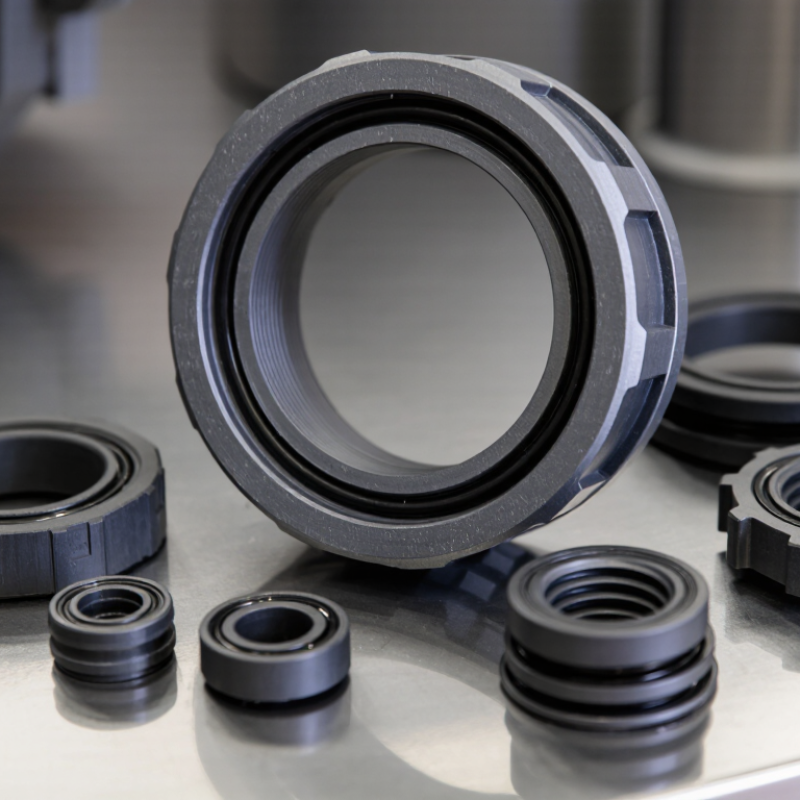
Silicon carbide seals are not one interchangeable product. Buyers should distinguish the seal-face arrangement from the ceramic grade. Single seals suit many clean, compatible liquids; double seals can provide extra containment for hazardous or poorly lubricating fluids. The choice depends on pressure, temperature, solids, and the support system—not just the pump model.
Material matters, too. Reaction-bonded silicon carbide offers useful toughness, while pressureless-sintered grades often suit demanding wear conditions. The ASM Handbook, Volume 4A, reports silicon carbide density near 3.1 g/cm³ and thermal conductivity around 120 W/m·K; actual values vary by grade. That helps explain its use in abrasive slurries and hot process fluids. But high hardness alone does not prevent damage. Poor flushing or dry running can still score a seal face.
For selection, match the face material to the liquid and check whether the mating surface is compatible. ISO 21049, aligned with API 682, provides a recognized framework for pump-seal systems and auxiliary plans. Ask suppliers for grade data, operating limits, and test details. One detail is easy to miss: fine particles can lodge between faces, even when the bulk liquid looks clean. I would verify the actual fluid sample, not rely only on a process description.
Compare typical bulk-density ranges for three silicon carbide material types commonly used in mechanical seal faces.
How to use this chart: These are typical published ranges; exact values vary by grade and manufacturer. Density alone does not determine seal performance. For pump, chemical-processing, or abrasive-slurry service, also check chemical compatibility, operating temperature, pressure, and the mating-face material.
Silicon carbide seal faces are not all made the same way. Reaction-bonded grades often offer good wear resistance, while pressureless-sintered grades can provide higher purity and broader chemical compatibility. Grade names vary between suppliers, so compare composition, porosity, and test data—not just the label. Small details matter.
Match the material to the actual service conditions. Record the fluid, concentration, temperature range, pressure, shaft speed, and any dry-running risk. A seal handling clean water may behave differently in abrasive slurry or hot chemicals. Check thermal cycling, too: rapid temperature changes can stress brittle faces. Do not guess.
Ask for data that reflects your operating range, including chemical compatibility and wear results where available. Confirm whether the stated limits apply to continuous duty or short excursions. A maximum temperature alone can mislead; pressure, lubrication, and heat removal affect performance. Some specifications are incomplete, and that deserves a second look. If conditions vary by season or process step, share those details before selecting a grade.
Silicon carbide seal selection starts with the drawing, not the material label. Confirm whether the design is a single or dual seal, and identify the rotating and stationary faces. Check the specified face arrangement, spring direction, and secondary sealing elements against the equipment’s installation manual. Small errors matter. A seal that looks similar on a bench may not fit the actual housing.
Measure shaft or sleeve diameter, seal chamber bore, working length, and face dimensions. Use the equipment drawing where possible, then verify critical dimensions with calibrated tools. Record units and tolerances; mixing inches and millimeters can create a costly mismatch. Also check available axial space, because a correct face diameter does not guarantee the assembly can be installed without spring over-compression.
Compatibility extends beyond geometry. Compare the silicon carbide grade and counterface with the process fluid, temperature, pressure, and operating speed. Review solids, start-stop cycles, and dry-running risk, since these conditions can change wear behavior. Confirm elastomer compatibility separately; the faces may resist the fluid while an O-ring does not. A common oversight is checking nominal size but not the seal’s working length after compression. Ask the supplier to confirm the drawing and operating conditions in writing. That step is not perfect, but it can expose assumptions before shipment.
A reliable silicon carbide seal supplier should explain how material quality is controlled, not just provide a polished product sheet. Ask for the grade specification, batch traceability, and inspection records. Confirm that the reported properties match the material used for your order. Small differences in porosity, hardness, or finished-face flatness can affect wear and leakage. Details matter.
Tip: Request a sample inspection report. Check dimensions, surface finish, and flatness measurements. Then compare them with your drawing and acceptance criteria. A certificate alone is not enough.
Manufacturing standards should be visible in daily controls. Ask how the supplier monitors machining, lapping, and final inspection. Find out whether measuring tools are calibrated and whether nonconforming parts are documented. A facility audit can help, but a tidy workshop is not proof of consistent output. Review actual records from recent production batches when possible. I would also ask how changes in raw material or process settings are approved; buyers sometimes overlook this point. Clear answers, consistent documents, and a willingness to discuss limitations are stronger signals than broad claims of “premium quality.”
| No. | Buying Tip | What to Assess | Evidence to Request | Buyer Verification |
|---|---|---|---|---|
| 1 | Specify the SiC material grade | Confirm whether the seal face is reaction-bonded or sintered silicon carbide. These manufacturing routes produce different material compositions and properties; reaction-bonded grades generally contain residual free silicon, which may affect compatibility in some chemical environments. | A material data sheet identifying the grade, manufacturing route, composition or applicable material specification, and relevant physical properties. | Match the proposed grade to the fluid, temperature, pressure, and operating conditions. Do not treat “silicon carbide” alone as a complete material specification. |
| 2 | Check chemical and application compatibility | Review the process fluid, concentration, temperature, solids, lubrication conditions, and possible start-up or upset conditions. Chemical resistance depends on the specific SiC grade and service environment. | A written compatibility assessment or documented service references for comparable operating conditions, including any stated limitations. | Provide the supplier with the actual process conditions and obtain written confirmation for the specified grade and duty. |
| 3 | Review manufacturing and quality controls | Assess controls for powder or feedstock handling, forming, sintering or bonding, finishing, inspection, nonconforming products, and process changes. An established quality system supports consistency but does not by itself prove that a particular seal meets its drawing. | A current quality-system certificate, relevant process-control records, inspection procedures, and the scope of the certified manufacturing site. | Check the certificate’s validity, issuing body, site, and scope. Confirm that the quoted production site is the site covered by the documents. |
| 4 | Set drawing and dimensional requirements | Define the sealing-face dimensions, thickness, flatness, parallelism, surface finish, edge details, and other critical features on a controlled drawing. Tolerances should reflect the equipment design and application. | A revision-controlled drawing, inspection plan, and sample dimensional inspection report using identified measuring equipment. | Compare the report with the approved drawing and confirm that measurement methods and units are clear. Avoid relying on generic tolerances when critical dimensions are unspecified. |
| 5 | Verify traceability and documentation | Check whether finished parts can be linked to their production batch and material records. Agree on the documentation required for each shipment before placing the order. | A sample inspection certificate or certificate of conformity, batch or lot identification, material records where applicable, and a documented record-retention process. | Confirm that the part marking, packing list, and inspection documents use consistent part numbers, drawing revisions, and batch identifiers. |
| 6 | Ask how performance is tested | Determine whether the supplier performs material, dimensional, or assembly-level checks and which tests are relevant to the finished seal. Test conditions and acceptance criteria should be agreed for the intended service. | Test procedures and representative reports stating the sample, method, conditions, results, and acceptance criteria. For external laboratory testing, request the laboratory’s relevant accreditation scope. | Ensure reported results relate to the supplied grade or part. A test result is meaningful only when the method, conditions, and acceptance limits are defined. |
| 7 | Confirm standards, packing, and change control | Identify any applicable equipment or industry standard in the purchase specification. For relevant pump mechanical-seal applications, ISO 21049 (API 682) may apply; its applicability depends on the equipment and project requirements. | A compliance statement identifying the applicable standard and edition, export-ready packing details, lead-time commitments, and a written process for notifying buyers of material or manufacturing changes. | Confirm standard scope and edition with the project specification. Check that packaging protects brittle ceramic faces from impact and that no unapproved changes are permitted. |
Silicon carbide seal quotes can look similar, yet the delivered cost often differs. Compare more than the unit price: include machining, inspection, export packing, freight, duties, and spare-part inventory. A custom groove or tighter flatness requirement may add setup fees and days. Ask suppliers to state tolerances, inspection records, and exclusions in writing. Small details matter. Measure lead time from approved drawings, not the first email or deposit. Confirm sample availability, production capacity, shipping method, and possible holiday delays. Leave a buffer; a promised date is not a guarantee.
After-sales support matters when a seal leaks, wears early, or arrives with a dimensional mismatch. Before ordering, ask who will review photos, measurements, and operating conditions, and how quickly they usually respond. Clarify warranty coverage, replacement procedures, and whether technical guidance is available for installation or failure analysis. Keep drawings and batch records accessible so both sides can investigate the same facts. A low quote may still be worthwhile, but only if support and delivery risks are understood. Even careful comparisons leave uncertainty; actual service life depends on the fluid, pressure, temperature, and installation quality.