What is Sic Electronics and How is it Transforming Technology?
Silicon carbide (SiC) electronics are paving the way for advancements in various technologies. Industries are rapidly adopting SiC components due to their efficiency and performance. Dr. Emily Carter, a leading expert in SiC technology, remarks, "SiC Electronics are reshaping the future of energy management." This transformation is evident across sectors such as power electronics and automotive manufacturing.
The high-temperature tolerance and energy-saving properties of SiC materials make them ideal for high-power applications. Electric vehicles and renewable energy systems are prime examples. However, the transition to SiC Electronics is not without challenges. Cost and manufacturing complexities can hinder widespread adoption. Companies must navigate these hurdles to realize the full benefits of this innovative technology.
As SiC Electronics continue to evolve, the industry must focus on improving production techniques. Some manufacturers find it difficult to scale their processes efficiently. Yet, the potential rewards offer compelling motivation to innovate. The future of SiC technology holds promise but demands perseverance and reflection on collective experiences within the industry.

Introduction to Sic Electronics and its Significance
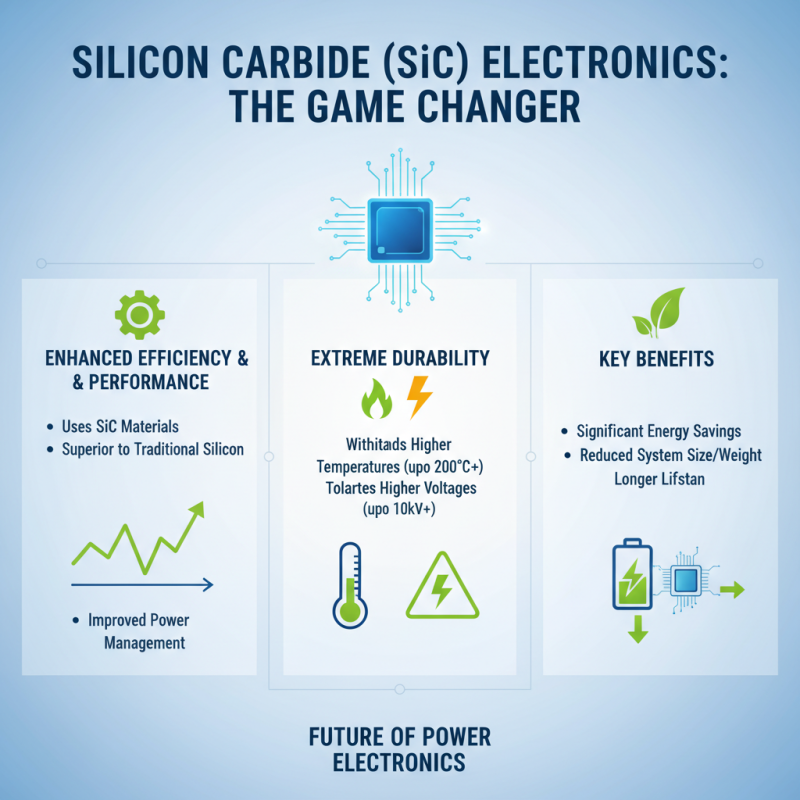
Silicon carbide (SiC) electronics have emerged as a game changer. This technology uses SiC materials to enhance efficiency and performance. Devices made with SiC can withstand higher temperatures and voltages. This translates to better power management and significant energy savings.
SiC electronics are crucial in various sectors, including renewable energy, automotive, and telecommunications. For example, electric vehicles benefit immensely from SiC-based power electronics. They enable faster charging and contribute to longer battery life. However, the transition to SiC technology is not without challenges. The manufacturing process can be complex and costly.
Moreover, while SiC devices offer many advantages, they may not yet replace traditional silicon electronics completely. There is still a need for further research and development in this field. Some applications may find silicon still adequate. As the industry evolves, ongoing discussions about the balance between cost and performance remain vital. The potential of SiC electronics is clear, but the path to widespread adoption may need more thoughtful exploration.
Key Properties and Advantages of Sic Materials
Silicon carbide (SiC) is gaining attention for its unique properties and advantages. This semiconductor material stands out due to its high thermal conductivity and wide bandgap. These characteristics allow SiC devices to operate efficiently at high temperatures and voltages. They are ideal for applications in electric vehicles and renewable energy systems.
Another significant advantage of SiC is its durability. It can endure harsher environments than traditional silicon. This resilience opens doors for more reliable devices. As the demand for energy-efficient solutions increases, SiC technology could become integral to reducing energy waste. Yet, despite its benefits, challenges remain. The manufacturing processes for SiC are still evolving, making production costs a concern.
Moreover, not all applications benefit equally from SiC's capabilities. In some cases, silicon may still prove more practical. Developers need to assess each scenario carefully. While the potential is compelling, the transition to SiC technology requires cautious evaluation and adaptability in real-world applications.
Key Properties and Advantages of SiC Materials
Silicon Carbide (SiC) materials offer several key properties that contribute to their advantages in high-performance applications. This chart showcases the significant benefits such as thermal conductivity, electric field breakdown strength, operating temperature range, switching frequency, and power density, demonstrating how these properties are making SiC a transformative technology in the electronics industry.
Applications of Sic Electronics in Modern Technology
Silicon carbide (SiC) electronics are becoming essential in modern technology. They have unique properties that allow devices to operate at higher temperatures and voltages. This makes SiC semiconductors ideal for power electronics. Many industries benefit from their efficiency, especially in renewable energy systems.
In electric vehicles, SiC electronics play a crucial role. They enhance battery performance, leading to longer driving ranges. These materials also improve the efficiency of charging stations. However, challenges remain in manufacturing processes. Not all SiC substrates are of high quality. This inconsistency can affect device reliability and performance.
Moreover, SiC technology is transforming industrial applications. Factories use SiC-based devices to reduce energy consumption. This shift supports sustainability goals. Yet, the cost of SiC components can be higher than traditional silicon. Companies must weigh the long-term benefits against upfront expenses. This balance is a topic of ongoing discussion in the tech community as the demand for more efficient solutions grow.
Challenges and Limitations of Sic Electronics
Silicon carbide (SiC) electronics offer significant advantages in efficiency and performance. However, there are challenges that cannot be overlooked. One major issue is the high cost of SiC materials. While their benefits are clear, many applications still find traditional silicon more affordable. This price barrier can slow adoption in various industries.
Manufacturing SiC devices is complex. The production processes require advanced technology and skilled labor. These factors can lead to inconsistencies in quality, making reliable supply chains difficult. Companies must navigate these challenges carefully to ensure they can meet demand. Moreover, the existing infrastructure often needs upgrades to accommodate SiC technologies.
Another limitation lies in thermal management. SiC devices can operate at high temperatures. However, managing heat efficiently requires innovative solutions. Failure to address thermal issues could lead to device failures. Therefore, researchers are actively exploring new materials and cooling techniques to improve the longevity and reliability of SiC electronics. The path to optimizing SiC technology is not straightforward, but it is a critical step for future advancements.
Future Trends and Innovations in Sic Technology
Silicon carbide (SiC) technology is reshaping various industries. It enables higher efficiency and performance in electronic devices. This compound material excels in high-temperature environments. As a result, it opens new doors for innovation in power electronics. Many sectors are exploring its potential for energy savings and improved sustainability.
Future trends indicate a surge in SiC applications. It's rapidly gaining ground in electric vehicles (EVs) and renewable energy systems. With enhanced thermal conductivity, SiC semiconductors can handle more power. This leads to smaller, lighter devices. However, challenges remain. Manufacturing processes for SiC are still being refined. Not all companies can access this advanced technology yet.
Moreover, the growth of SiC technology raises questions. How do we ensure the supply chain can meet demand? Will costs remain competitive as the technology matures? The industry must continue innovating while addressing these concerns. Overall, SiC technology promises a bright future, but it also requires careful consideration and adaptation.