10 Best Uses of Aluminium Oxynitride in Modern Industries?
Aluminium Oxynitride, a remarkable ceramic material, is gaining traction across various industries. Known for its unique combination of properties, it presents an intriguing alternative for applications traditionally dominated by glass and other materials. Its exceptional strength and transparency render it ideal for high-performance environments. The innate resistance to heat and chemical corrosion further enhances its appeal in demanding settings.
In aerospace, Aluminium Oxynitride is revolutionizing cockpit design. It enables clearer visibility while maintaining structural integrity under extreme conditions. The defense sector also embraces this material to create armor systems that offer enhanced protection without added weight. Despite its advantages, the challenges of production and cost persist. Continued research is essential to unlock its full potential.
Beyond aerospace and defense, Aluminium Oxynitride is making strides in electronics and optics. Companies are experimenting with it to develop advanced laser optics and protective coverings. However, consistent performance and scalability remain crucial hurdles. As industries evolve, the opportunities for Aluminium Oxynitride expand, though practical applications need careful evaluation. Its future in modern technology looks promising, albeit with complexities that must be navigated.

Applications of Aluminium Oxynitride in Aerospace Engineering
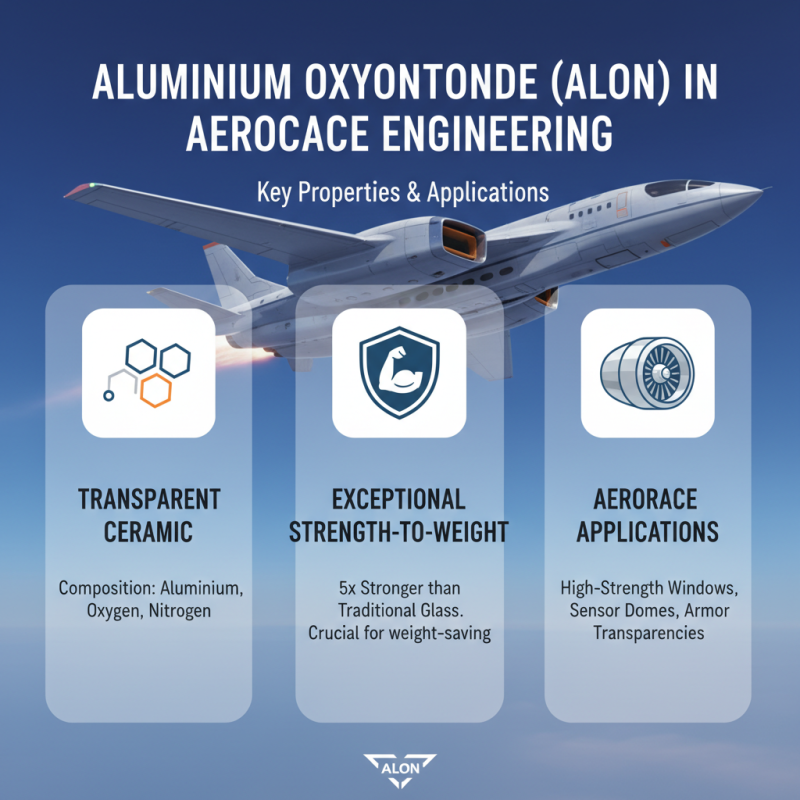
Aluminium oxynitride, often referred to as ALON, is gaining traction in aerospace engineering due to its unique properties. This transparent ceramic material combines aluminium, oxygen, and nitrogen, creating an exceptional balance of strength and weight. Reports indicate that ALON is around five times stronger than traditional glass. Such strength is crucial for aerospace applications where every gram counts.
In aerospace, ALON is used for cockpit canopies and protective windows. Its transparency allows for enhanced visibility while providing ballistic protection. In a detailed analysis, the American Institute of Aeronautics and Astronautics noted that ALON can withstand impacts better than many alternatives. This is especially important for military aircraft, where performance and safety are top priorities.
However, the integration of ALON in aerospace is not without challenges. The production process can be costly, and scaling up for mass manufacturing remains a hurdle. Additionally, the material can be brittle under certain conditions, leading to concerns over its long-term durability in extreme environments. Addressing these concerns is vital to fully realize ALON's potential in the aerospace sector.
Role of Aluminium Oxynitride in Military and Defense Technologies
Aluminium oxynitride, often referred to as ALON, is gaining traction in military and defense applications. Its unique properties make it an ideal material for transparent armor and protective gear. ALON's high strength and light weight contribute to enhanced mobility for soldiers in the field. Engineers and military strategists appreciate the material's ability to withstand ballistic impacts while remaining clear, allowing for visibility.
In weaponry, ALON serves as a crucial component in optics and sensors. The material’s thermal stability and resistance to wear lead to improved performance in challenging environments. However, the manufacturing process can be complex and costly. This raises questions about scalability and accessibility. While ALON shows immense promise, its integration into existing systems needs further exploration. The balance between cost and effectiveness remains a vital consideration for defense sectors.
ALON's potential isn’t just theoretical. Real-world applications are being developed, but challenges persist. Researchers are constantly looking for ways to enhance the material’s properties while keeping production efficient. The future of ALON in military technology is bright, but it needs careful evaluation to maximize its impact. Understanding both benefits and limitations is essential for future advancements.
Innovative Uses of Aluminium Oxynitride in Optoelectronics
Aluminium oxynitride, often referred to as AON, has gained significant attention in optoelectronics. Its unique combination of properties, such as transparency in a wide range of wavelengths, makes it a versatile material. AON is not only lightweight but also incredibly durable. These characteristics allow it to be used in advanced optical components, like lenses and windows, enhancing performance in demanding environments.
The effectiveness of aluminium oxynitride stems from its unique structure. It is a synthetic transparent ceramic that offers superior hardness and thermal stability. These features are crucial for optoelectronic devices that operate under extreme conditions. For instance, AON is being explored for use in high-power laser applications. The material can withstand harsh conditions while maintaining optical clarity, which is essential for precision tasks.
Despite its advantages, aluminium oxynitride is not ubiquitous yet. Production can be complex, and cost factors are still relevant. Researchers continue to explore its full potential in the field. As improvements in manufacturing techniques emerge, we may see wider applications of AON in optoelectronics. The future looks promising, but challenges remain in making it more accessible.
Aluminium Oxynitride's Impact on the Glass Industry
Aluminium oxynitride is revolutionizing the glass industry. Its unique properties make it a game-changer for applications that require durability and transparency. This advanced material combines the benefits of ceramics and glass, offering exceptional strength and resistance to extreme conditions. In environments where traditional glass fails, aluminium oxynitride thrives.
For instance, in aerospace, aluminium oxynitride is used for cockpit canopies. It provides high visibility while safeguarding against impact. Similarly, the military employs this material for armored vehicles, enhancing protection without sacrificing weight.
Tips: When exploring aluminium oxynitride for your glass applications, consider its thermal stability. This property can lead to better performance in high-temperature situations. Also, think about the cost-effectiveness of investing in advanced materials. Initial expenses might be higher, but long-term durability often leads to savings.
Another intriguing aspect is its potential in architectural design. Designers appreciate the sleek aesthetic and safety features of aluminium oxynitride. However, not all projects will benefit equally. Thoroughly assess whether the attributes align with your specific needs. Proper application is crucial for maximizing its advantages.
Aluminium Oxynitride Applications in Various Industries
This chart illustrates the diverse applications of Aluminium Oxynitride across modern industries. The data represents the significance of each sector utilizing Aluminium Oxynitride, showcasing its impact and versatility.
Advancements in Healthcare Utilizing Aluminium Oxynitride Properties
Aluminium oxynitride, often recognized for its unique optical and mechanical properties, is gaining traction in healthcare. This advanced ceramic material boasts exceptional transparency and strength, making it suitable for various applications. For instance, its use in creating protective eyewear for medical professionals enhances visibility while ensuring safety. Clear vision is essential during surgeries and delicate procedures.
Moreover, aluminium oxynitride is being researched for its potential in medical implants. Its biocompatibility may lead to successful integration with human tissue. This attribute can reduce rejection rates for new implants, a critical aspect in patient recovery. Some studies suggest its use in dental applications as well, where durability and aesthetics are paramount. However, challenges remain, including the cost of production and the scalability of manufacturing techniques.
In the field of diagnostics, aluminium oxynitride can improve imaging technologies. Enhanced imaging could lead to earlier disease detection and better patient outcomes. While the material shows promise, more research is needed to fully understand its long-term effects on the human body. Continued investigation and innovation are essential to unlock its full potential in the healthcare industry.
10 Best Uses of Aluminium Oxynitride in Modern Industries
| Application |
Industry |
Benefits |
Properties |
| Transparent Armored Windows |
Defense |
High impact resistance, Lightweight |
Transparency, Strength |
| Medical Imaging Devices |
Healthcare |
Enhanced imaging clarity, Chemical stability |
Optical properties |
| Laser Equipment |
Manufacturing |
Durability, High thermal resistance |
Thermal conductivity |
| Electronic Substrates |
Electronics |
High dielectric strength, Low thermal expansion |
Electrical insulation |
| Protective Coatings |
Automotive |
Corrosion resistance, Scratch resistance |
Durability |
| Optical Components |
Telecommunications |
High transmissivity, Low scattering |
Optical clarity |
| Wear-Resistant Parts |
Mining |
Extended service life, Reduced maintenance |
High hardness |
| Sensors |
Aerospace |
Resistance to extreme conditions |
Thermal stability |
| Biomedical Implants |
Medical |
Biocompatibility, Strength |
Mechanical properties |
| Protective Eyewear |
Healthcare & Safety |
Lightweight, High visibility |
Impact resistance |